
Guest Essay
The Agent in the Room
Most AI agent security watches the tools a company bought, while more of the real work runs on personal agents nobody sees. Mostafa M. Elkordy argues for bring your own agent with proof, not prohibition, and sets out what that proof must show.
Disclosure. Mostafa M. Elkordy is a member of the AI Trust Council, which governs the Trust Identity Protocol mentioned in this essay. He is the author of OSARA and is involved in Proof-of-Control, both discussed here. The views are his own. The AI Lab publishes Insights and made the animations for this essay.
The industry has a convenient story about agent security. In that story, AI agents are visible systems: process bots, workflow copilots, licensed seats, SSO, a policy PDF, a dashboard. Controllers believe they can see what is running. Auditors believe they can sample what ran. Boards believe the risk lives inside the tools they bought.
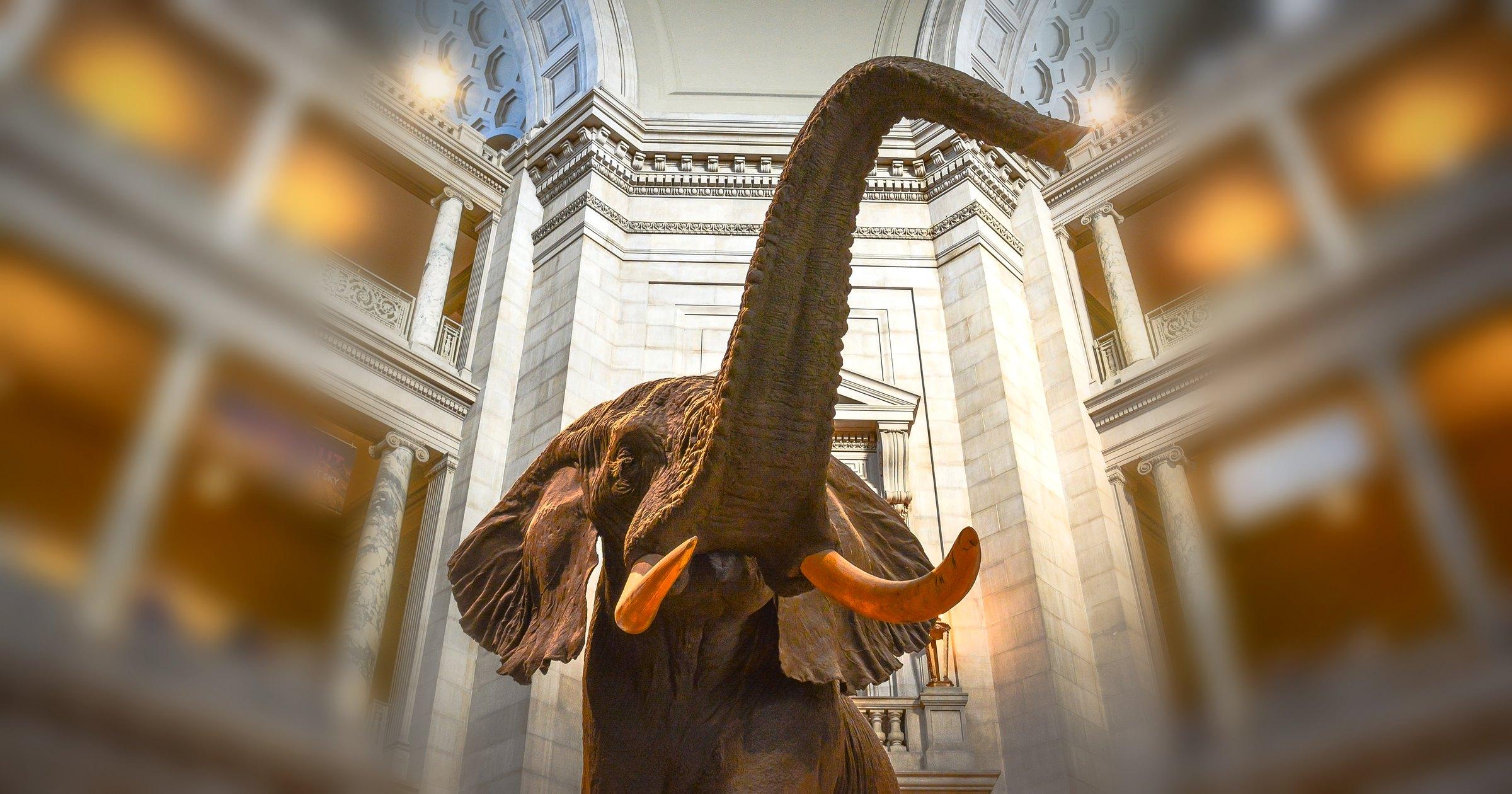
That story is a strawman. It ignores the elephant in the room.
The elephant is the personal agent. It is an individual subscription, an individual username and password, a laptop, a browser, a harness such as Cursor, Hermes, Pi, Claude Code, Codex or a custom loop on a personal API key. It does not announce itself as “an enterprise agent.” It looks like a person working. Often it is almost impossible to recognize as an agent at all, and even when you can, you still cannot see the memory, the skills, the prompts or the authorizations that produced the output. Market pressure did not ask permission. Velocity became contagious. Conformity forced everyone else to follow. For a growing share of knowledge work, this is how people work and live.
Recent surveys only confirm what practitioners already feel. WalkMe’s August 2025 study found that 78% of U.S. workers who use AI on the job use AI tools their employer did not provide. TELUS Digital’s January 2025 survey found that 68% of GenAI users at U.S. companies with 5,000 or more employees reach public assistants through personal accounts. Exploding Topics’ 2025 research found roughly half of AI-using employees working at least partly through a personal account, with nearly three in ten paying for their own AI tools out of pocket. Deloitte’s 2026 UK GenAI workforce survey found nearly a third of GenAI users operating without their employer’s knowledge. Blocking that reality, or pretending it does not exist, does not restore control. It only pushes the elephant further into the dark.

We have seen this migration before
Computing already lived through a version of this argument. Work once meant a mainframe and a terminal, with centralized control, thin endpoints and a priesthood that decided what ran. Then personal computers arrived. They were messy. They were uneven. They were resisted. They also became inevitable, because capability in the hands of individuals beat capability locked behind a counter.
My first computer had 256 MB of RAM, and at the time that felt excessive. Believe me when I say more capable machines will keep making their way to every individual. When hundreds of gigabytes of memory are ordinary, when models are more powerful and more efficient, the laptop and the operating system will be the harness, and the phone will be the key, much as we already reach for a device in our pocket to authorize the important act. Local fine-tuned and optimized models will live on personal machines as a matter of course. Organizations will still run their own inference, in private data centers or as rented intelligence from clouds, in the same way they rent Amazon and Azure today. That trajectory matters. It is not the whole article.
Until that world is fully here, we are stuck in the dangerous middle. Personal harnesses are powerful enough to touch business crown jewels but not yet standardized enough to prove they are safe. Organizations are still resistant to the idea that employees will use their own rigs. Privacy is exposed, misconfiguration is common and full visibility is rare. Security practitioners do not have time to evaluate every machine, especially every personal computer. In many jurisdictions and employment models, they are not even allowed to.
The coming switch is not “IT images every laptop.” It is that the owner of the rig must prove the agent environment is safe, secure and auditable, just as anyone can buy any car, yet keeping it maintained and passing annual inspection is the owner’s obligation.
Some will be skeptical that agent environments can ever work that way. Eventually they will. BYOD, bring your own device, has been policy language for years. We now need BYOA, bring your own agent. Expectations, certification levels, minimum specs, forbidden actions, reporting duties and revocation conditions all have to be written down and enforced at the boundary. Many frameworks speak to pieces of this. I will reference Proof-of-Control, a draft standard from the Advanced AI Society hosted at LF Decentralized Trust, and OSARA, because I am involved in both. One sets the evidence bar, and the other is an architecture that can meet it.
Agent security must work for every kind of agent
That is the focus. Not a war on personal agents. Not a fantasy that process agents are the whole story. Agent security, whether the agent lives inside the organization or on a personal subscription, must be able to defend itself in an audit or a legal investigation. It must deliver confidentiality, integrity and availability. It must cleanly segregate domains, keeping personal transactions apart from work transactions, personal memory apart from corporate scope and personal skills apart from licensed enterprise capability.
The industry needs security that travels with the agent, not security that only exists when the agent happens to sit inside last year’s procurement category. Personal agents are here to stay. Soon they will be the norm. The question is whether we design for that fact.
What fails when any agent acts
Whether the agent is a sanctioned process bot or a personal harness that looks like a browser session, five properties keep recurring.
The identity is rented. An API key, tenant ID, consumer login or local profile. Impersonation and repudiation become the same incident.
The memory is readable by someone else. Host, laptop backup, model provider or sync service. Crown jewels travel into places policy never approved.
The log is not evidence. A diary the operator can edit is not a chain an audit or court can trust.
Instructions arrive from too many directions. User, employer, platform, model provider and retrieved documents.
Nothing independent inspects the runtime. Marketing badges are not technical, owner-present examination. Personal harnesses often have no inspection surface at all.

Who authorized the act?
Can the record be trusted?
Did anyone else read the memory?
Can the agent be stopped, moved and shown to be the same agent afterward, and who owns the skill?
Under strawman enterprise AI, the honest answer is usually silence. On the personal harness that met the deadline, the silence is deeper. There was often never a design for evidence at all.
Proof, not prohibition
Policies are not proof. Attestations are not proof. A vendor dashboard is not proof. Blocking personal agents without an equivalent path is not security. It is theater that the market will route around.
Proof-of-Control asks whether anyone can verify, without trusting the operator, that an agent stayed inside its controls. Tier 1 and Tier 2 do not count. Tier 3 is trust-minimized. Tier 4 is self-enforcing and hardware-rooted. Architecture must produce that evidence for enterprise agents and personal agents alike, across identity, authorization, security, privacy, portability and provenance.
Crown jewels, rules of engagement and the boundary
Skills, automations, workflows and agent-built products are intellectual property, often more valuable than the rented model behind them. They must be encrypted under owner-controlled keys and verifiable by people and APIs, including through public ledgers such as TIP. Leaving them unprotected on a personal disk is how the agent economy’s crown jewels become unownable.
BYOA rules of engagement follow from recognizing the elephant rather than denying it.
- Enable with certification. Personal agents that can prove identity, integrity and auditability get a path into the workplace.
- Regulate at the boundary. Enterprise gateways intercept personal-agent output, apply policy and regulate access when needed, without seizing the employee’s machine.
- Segregate domains. Work scopes, memory and credentials must be separable from personal life.
- Put the proof burden where it belongs. Owners of personal rigs must demonstrate confidentiality, integrity and availability under challenge.
One maturation path is already visible if you squint. Inference starts to look less like a product locked inside the corporate estate and more like an internet connection, connectivity to intelligence. The office issues the work path, and the person’s memory, harness and rig stay theirs. What changes for employment is a removable layer, components that constrain work transactions to approved providers and scopes, then lift cleanly when employment ends. The harness becomes like the laptop. The phone remains the key.
Best practices: keys, quotas and the orchestra
Be precise about what employees are actually doing. This is not a story about chatbots that help rewrite emails. The working stack designs software, builds tools, drives browsers, opens terminals, reads repositories, calls APIs and ships artifacts under deadline. Treating that as “a productivity add-on” is how security programs stay a decade behind the labor market.
Issue work API keys with usage quotas. Give people sanctioned connectivity to approved models, with budgets, rate limits, logging of the call metadata and revocation on separation, and let them plug those keys into the harnesses they already know how to run. Quotas are not punishment. They are a conductor’s baton. They make cost visible, abuse detectable and capacity plannable. A key without a quota is an open tab. A ban without a key is an invitation to a personal credit card.
Invest in local inference for highly sensitive and regulated data. Patient records, deal rooms, unpublished financials, citizen data and anything under a statutory confidentiality duty should not be the default passengers on a public frontier endpoint. In my experience, roughly ninety percent of work-related use cases do not need a frontier model at all. Local and mid-tier models cover drafting, summarization, coding assistance, triage and routine analysis at far lower cost and with far less exposure. Frontier endpoints are for the minority of tasks that actually need them.
Allow local AI on personal machines, and be honest about personal frontier use, then provide approved, realistic alternatives. People will run local models where privacy and cost favor them. People will also reach for proprietary personal frontier subscriptions when the work demands it. Security that only says “no” while offering nothing comparable in latency, capability or workflow fit does not produce compliance. It produces hiding. Security writers made the point long before agents. Bruce Schneier observed in Secrets and Lies (2000) that people offered a choice between convenience and security will choose convenience, and Anne Adams and Angela Sasse’s study “Users Are Not the Enemy” (1999) showed why. People do not fail security systems because they are villains. They fail them because the systems are opaque, inconvenient or impossible to reconcile with the job they were hired to do. That diagnosis still holds, and it will hold tomorrow, when the “system” is a personal harness with a terminal and a browser rather than a password policy. Most people who break the rules do so because they do not know what the rules are, or because they cannot meet the demand for speed and quality without that path. Both failures are management failures, not moral ones.
Run in-person induction and tabletop exercises for every user, in general terms, not a product demo. Webinars will not carry this one. Bring people into the room. Teach the BYOA expectations, the certification bar, the forbidden actions and the approved paths without turning the session into a vendor pitch. Then use the same sessions to learn how work actually gets done. Observe and record day-to-day harness use, and do not block mid-discovery. Productive employees should not feel that they are stealing or breaking the rules in order to meet a deadline. I say this as someone with years in cybersecurity and an MBA in business strategy. The balance between productivity and security is unusually sensitive right now, and security’s job is to support and enable the business to thrive, not to hinder progress.
Agent security cannot be managed with a big stick. It has to be managed like an orchestra.
The conductor’s job is not to silence the violin. It is to keep every instrument in tempo, in key and audible when something goes wrong. A stick creates silence in the room and noise in the shadows. An orchestra creates work you can hear, and prove.
On separation, corporate access must die immediately while the person’s agent and personal IP leave with the person. Work product inside an authorized scope follows employment law. Shadow copies of a person’s agent are not a retention strategy.
What a serious control plane has to do, for all agents
Strip away brand names. Across process agents and personal agents, the evidence bar is the same: owner-held keys (increasingly the phone), encrypted memory on untrusted hosts, contemporaneous hash-chained authorization records, fresh human approval for high-stakes acts, integrity measurement with lock states, migration that trusts neither host, independent inspection and skills treated as IP.
Residual honesty remains. No certificate stops prompt injection. No protocol eliminates coercion of a person who holds the device. A serious model names those limits.

OSARA as one way to meet the bar
I wrote OSARA, the Open Sovereign Agent Reference Architecture, and its companion AI Bill of Rights to make that evidence bar buildable for personal, enterprise and government agents alike. Alongside Proof-of-Control, it is the reference pair I use when a BYOA policy needs both a verification standard and a concrete architecture. Other stacks may get there differently. What matters is whether the evidence survives audit, for the elephant as well as for the brochure.
Sovereignty cannot be granted by terms of service. It has to be enforced by cryptography.
In OSARA, the private key lives in an Owner Authorization Device and never enters the runtime. Memory is encrypted under that key. The audit log is chained and signed. Integrity measurement escalates through graduated lock states. Migration is owner-signed and destination-verified. Privilege differs by tier, but the duty to produce evidence does not. Mapped against Proof-of-Control, those mechanisms aim at Verifiability Tiers 3 and 4.


What to require before the inquiry
Stop strawmanning. Put personal agents in scope. Write a BYOA policy with expectations, certification levels, minimum specs, forbidden actions and reporting. Induct people in person, with tabletops rather than webinars, and listen to how they actually work before you harden the rules. Then treat Proof-of-Control as a yes-or-no question for every agent class that can touch work, including Cursor, Hermes, Pi and custom loops. Publish what you can detect on the working stack, not only what the brochure bought. The practices above are the minimum, and the control-plane bar is the test. Anything less is securing a strawman while the elephant does the work.
The window is a design window
Agents are compressing the same migration personal computers forced on the mainframe. If the default that hardens is rented identity, readable memory, rewriteable logs, unowned skills and a dual stack of visible process plus invisible personal labor, audits and courts will assign blame to people who cannot produce proof. The alternative is enablement with evidence, BYOA with proof rather than prohibition into the shadows. OSARA shows one way to build it. Proof-of-Control says whether a given system produces the evidence. Public ledgers such as TIP make digital IP checkable by more than faith.
The agent is already in the room. The market has already voted.
The only open question is whether we keep strawmanning visibility, or build agent security that works for every agent that actually acts.
Questions readers ask
- What is BYOA, bring your own agent?
- BYOA extends bring your own device to AI agents. Employees use their own agent, harness or subscription for work, and the organization sets the terms in writing: expectations, certification levels, minimum specs, forbidden actions, reporting duties and revocation conditions, enforced at the boundary rather than on the employee's machine.
- What is shadow AI, and why is a personal AI agent different?
- Shadow AI is AI used at work without the employer's approval or knowledge. A personal agent goes further than a chatbot. It can design software, drive a browser, open a terminal, read repositories, call APIs and ship work, and from the outside it often looks like a person working.
- What is Proof-of-Control?
- Proof-of-Control is a draft open standard from the Advanced AI Society, hosted at LF Decentralized Trust. It asks whether anyone can verify, without trusting the operator, that an agent stayed inside its controls. Tier 1 (assertion) and Tier 2 (attestation) do not count. Tier 3 is trust-minimized and Tier 4 is self-enforcing. The author is involved in its development.
- What is OSARA?
- OSARA, the Open Sovereign Agent Reference Architecture, is an open reference architecture written by the author. The owner's private key stays in an Owner Authorization Device and never enters the runtime, memory is encrypted under that key, the audit log is chained and signed, and migration is owner-signed and destination-verified. Its companion, the AI Bill of Rights, is a separate document from the White House Blueprint for an AI Bill of Rights published in 2022.
- How should a company start securing personal AI agents?
- Put personal agents in scope, write a BYOA policy, issue work API keys with usage quotas, keep highly sensitive and regulated data on local inference, offer approved alternatives that match personal tools in speed and capability, and run in-person induction and tabletop exercises before hardening the rules.
- Where does the Trust Identity Protocol fit?
- The essay names public ledgers such as TIP as one way to make skills, automations and agent-built work verifiable by people and APIs. TIP records who made a piece of content, when, how it was made and whether it has changed since. It does not prove that content is true.
Sources
- WalkMe, “Employees Left Behind in Workplace AI Boom” survey of 1,000 U.S. workers who use AI (August 27, 2025)
- TELUS Digital, survey on enterprise employees’ use of shadow AI, fieldwork January 2025 (February 26, 2025)
- Exploding Topics, AI workforce research, survey of 1,003 AI users (2025)
- Deloitte UK, GenAI Workforce Survey of 25,000 UK workers (September 16, 2026)
- Proof-of-Control, draft standard, Advanced AI Society at LF Decentralized Trust
- Bruce Schneier, Secrets and Lies: Digital Security in a Networked World (Wiley, 2000), and “Security Design: Stop Trying to Fix the User” (2016)
- Anne Adams and Martina Angela Sasse, “Users Are Not the Enemy,” Communications of the ACM (December 1999)
- Hermes Agent, Nous Research and Pi
- The AI Lab, Trust Identity Protocol
Mostafa M. Elkordy is the author of OSARA, the Open Sovereign Agent Reference Architecture, and its companion AI Bill of Rights, which is not the White House Blueprint for an AI Bill of Rights of 2022. He has more than 25 years of experience in cybersecurity, autonomous systems and agentic orchestration, and holds an MBA in Strategic Management and the CISSP and GCSA certifications. He is a member of the AI Trust Council. The ideas, perspectives and practices in this essay are his own and reflect his personal views and professional experience.
The eight animations and their original music, composed for each film and played on sampled orchestral instruments, were made by The AI Lab to explain the essay’s ideas. Survey figures are from WalkMe (August 2025), TELUS Digital (January 2025), Exploding Topics (2025) and Deloitte UK (2026). Views in guest essays are the author’s own. Read how the Trust Identity Protocol works, or what makes a Verifiable Asset.