
Guest Essay · Part 1 of 2
What Comes After Memory
Knowledge maps keep growing, and ontology layers keep stacking. A mind that cannot forget will eventually spend its life rereading itself.
Disclosure. Mostafa M. Elkordy is a member of the AI Trust Council, which governs the Trust Identity Protocol. He is the author of OSARA. The views are his own. The AI Lab publishes Insights and made the animations and their original music for this essay.
The year 2026 is not over, and it already feels like several years of artificial intelligence got folded into one.
The demos kept coming. Context got longer. Systems got faster at the work we actually hand them. Underneath all of that, one problem refused to stay solved. Memory. How you train a rig so the next run of a familiar task costs fewer tokens and less time. How you reach into a knowledge base, a tool, a live source, and come back with something that is current. How you stop paying the full price of recall on every turn.
For a long stretch, the default answer was vector retrieval. Embed the corpus, search for what sits nearest, drop those passages into the prompt and treat proximity as knowledge. It was a real step, and it had a ceiling. Nearness can show you what looks related. What is true right now, what has gone stale, what contradicts the instruction you just gave, what should have been allowed to fade. Nearness says nothing about any of that.
So the practice moved. Dynamic access. Systems that open the right source in the middle of a thought. Real-time intelligence, drawn at the moment it is needed, from the place that actually holds it. That shift is underway, and it is the right direction.
The stack
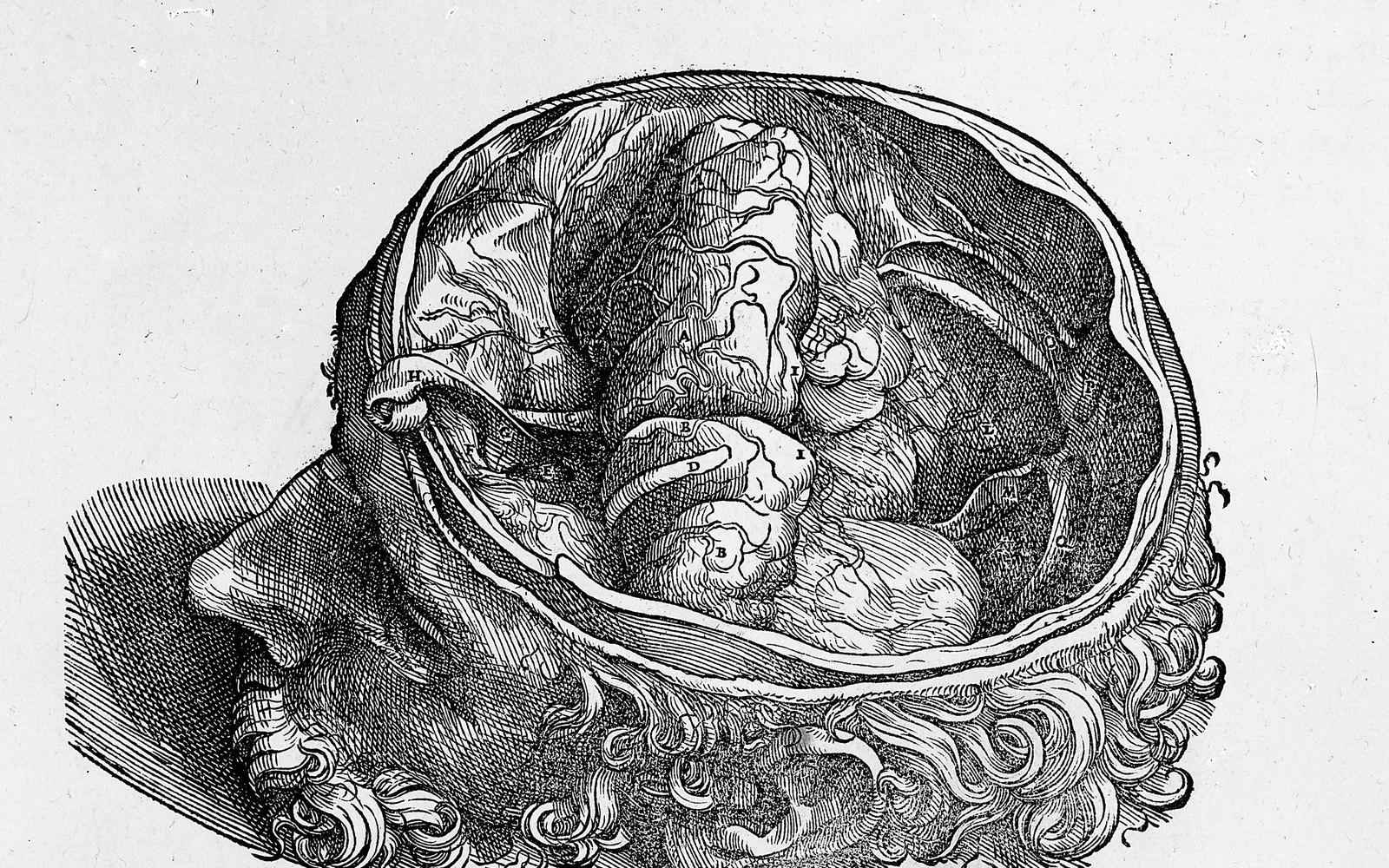
Alongside that shift, knowledge maps grew, and ontology layers kept evolving. Most of that growth is stacking. A new map sits on the last map. A new ontology sits on the last ontology. Names multiply. Relations multiply. Very little is retired, merged or reconciled. The rig becomes a tall building in which every floor is still furnished. Retrieval gets richer. The mind that has to carry the building gets heavier.
We are walking into a cognitive overload era with the most capable models we have ever run. Memory, skills and instructions drift out of agreement. A skill learned in March argues with a rule written in September. A retrieved page contradicts the standing instructions. A preference saved last quarter fights a correction given five minutes ago. The model treats all of it as present and binding. Everything stays at full volume. The context gets heavier, the contradictions get subtler, and the system spends more of its budget rereading its own past.
Accumulation is a powerful trick. It is a poor destination.
Four kinds of work
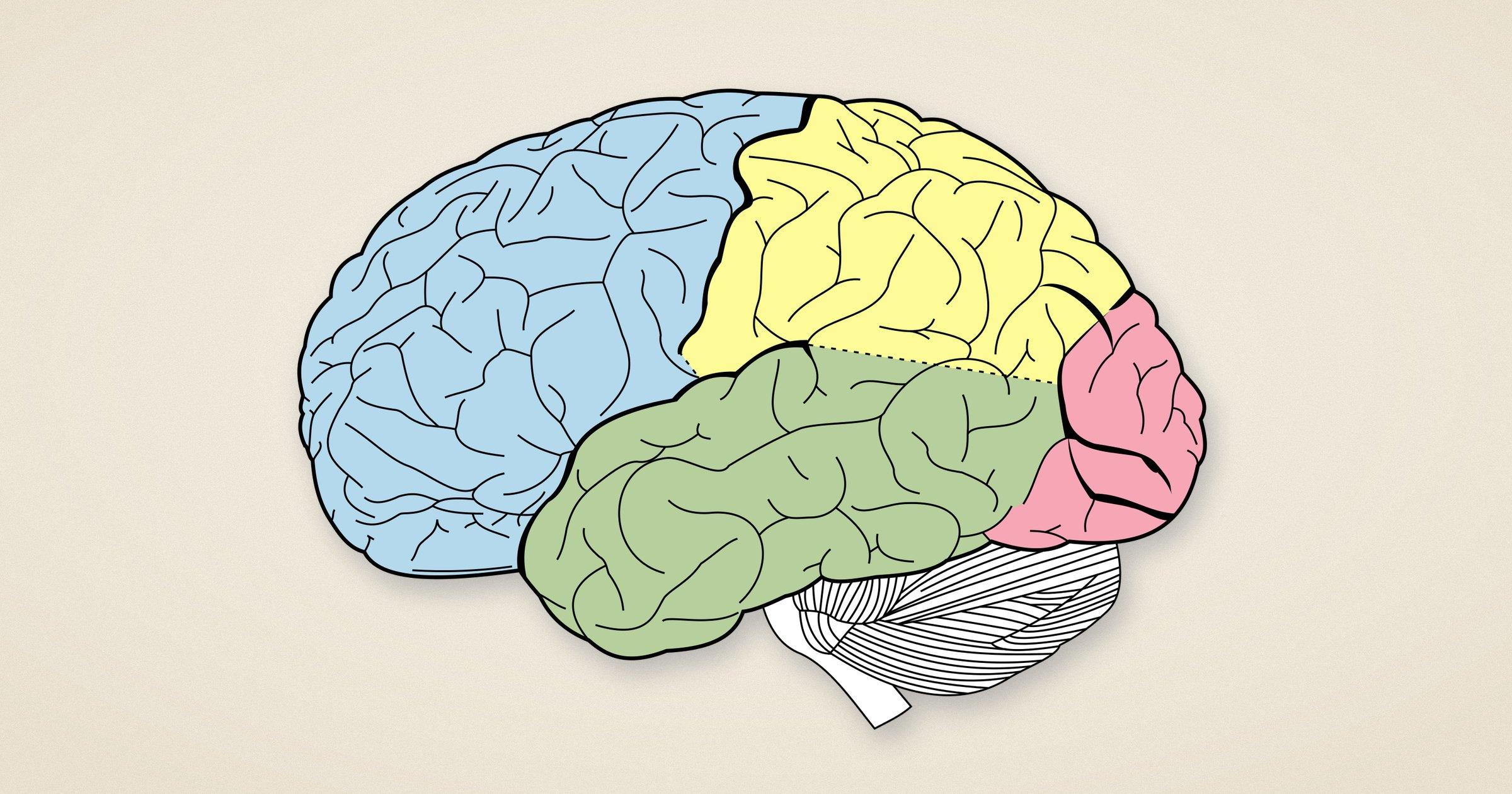
A living brain answers by dividing the work. We describe the cortex in four lobes, and the map is coarser than the organ, but the lesson is the right one. Each lobe carries a different kind of labor. The occipital lobe makes sense of what is seen. The temporal lobe holds memory, sound and meaning. The parietal lobe gathers what arrives from different senses into one situation. The frontal lobe plans, chooses and holds a course. They stay in conversation. They do different jobs.
A system that piles maps, skills and instructions into one always-on context is asking a single voice to be all four lobes at once. The overload is what that request feels like from the inside of the rig.
Forget, and dream
Models, and the harnesses we build around them, have to be able to do two things. Forget. And dream. We talk about both rarely, because both look like defects. A system that can store, retrieve and answer, and cannot do these two, is only half a mind.
Two kinds of dream
Daydreaming is a vision, a prophecy, a stretch of deep thinking, a creative moment. Call it whichever of those you like. It is prediction. You picture something that did not exist, something that was never part of your experience and was never in the training data, and you try to see a shape that is still absent. I think we will eventually be able to do this.
The second kind of dreaming is the ability to forget. Deleting. Merging. Optimizing the memory you already hold. That is the one to emphasize now. A brain runs it in order to remain a brain. Through the night it replays, compresses, completes and connects. It finds the gap between two things learned apart and builds the bridge. It deletes what no longer earns a place, merges what should have been one thing and optimizes the rest into something a person can carry without carrying all of it.
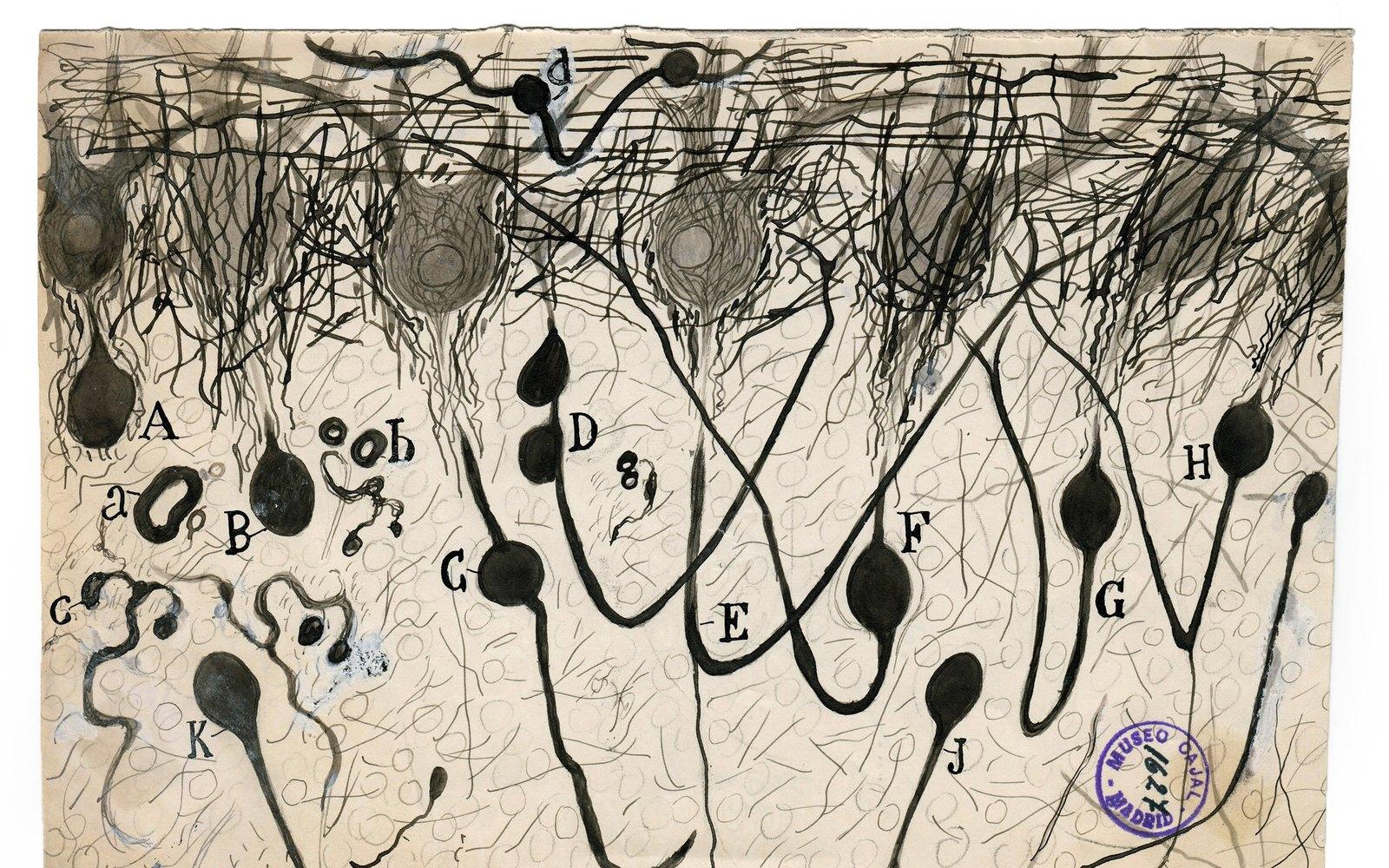
We will learn to predict. What matters now is deleting, merging and optimizing the memory we already hold.
I believe this second kind of dream is the next generation of recursive self-improvement. At the very least, it has to sit at the core of that process. A system that only adds, retrieves and stacks will keep getting larger and less coherent, and we will keep calling the result scale. Improvement begins when a harness is allowed to delete, merge and optimize the store, and hand the morning a lighter mind.
A daily quiet
The interval matters as much as the idea. A consolidation pass every month or two arrives after the stack has already drifted. This should be a daily process. The model that answered all day has to be allowed to go quiet. The work that runs through the night takes the morning, carrying a memory that has been sorted. One life happens in the stream: requests, tools, deadlines, the noise of being useful. The other happens in the quiet: deleting, merging and optimizing. The slow choice of what is still load-bearing and what can be released.
A person does both poorly in the same hour. I expect the same of any system we ask to remember everything while it is still answering. Always-on will have a long and impressive run. A quieter rhythm is the one that lasts.
The gift
Forgetting is a form of judgment. A mind that keeps every slight, every wrong turn and every outdated fact at full volume has a hard time healing, a hard time updating and a hard time separating a lesson from the experience that delivered it. Picture a life in which nothing can be released. Every name, every number, every bad season, all of it still loud. We would call that a condition.
I think about this from the other side of the same mechanism. There are days I am sure I am standing at the edge of my own memory. Names that should be immediate. Numbers I have used for years. Topics I know well that suddenly will not surface. It is embarrassing, and it is deeply frustrating. I am grateful for it anyway. One of the greatest gifts our Creator built into us is the ability to forget our way toward healing, to keep the lesson and let the bad experience loosen its grip. The same design that drops a phone number is the design that keeps a hard year from staying sharp forever.
Writing this, I am close to certain that a daily dream of compression, forgetting and repair is the next form intelligence takes. Remembering was the first capacity we raced to copy. Forgetting, and the dream that makes forgetting wise, is the one we are late to.
The systems that learn it will feel lighter in the moment and stronger over a year. They will cost less, because they will have stopped rereading their entire lives on every question. They will contradict themselves less, because something, in the dark, was allowed to choose. They will resemble us in the way that matters. They will know what to let go.
This part ends with the night's work. Part 2 is what I see beyond it: a new form factor, a clash of titans and the natural purpose of intelligence, which is to serve humanity.
Mostafa M. Elkordy
Questions readers ask
- Can AI forget?
- Most AI systems today add and retrieve memory but rarely remove it. Elkordy argues they should forget on purpose, by deleting what no longer earns a place, merging what should be one thing and optimizing the rest. In machine learning research, removing specific data from a trained model is called machine unlearning, and Bourtoule and colleagues describe it as notoriously difficult.
- How does AI agent memory work today?
- Many systems use vector retrieval. They turn a body of text into vectors, search for the passages nearest a question and add them to the prompt, the approach known as retrieval-augmented generation (Lewis et al., 2020). Elkordy writes that nearness shows what looks related but says nothing about what is current, stale or contradictory.
- Why does the brain forget, and is forgetting useful?
- Neuroscientists describe forgetting as active and useful. Richards and Frankland (Neuron, 2017) write that transience reduces the influence of outdated information and prevents overfitting to past events. Elkordy calls forgetting a form of judgment, a way to keep the lesson and let a bad experience loosen its grip.
- Does AI need sleep the way the brain does?
- AI does not sleep. Elkordy uses sleep as a model. The U.S. National Institute of Neurological Disorders and Stroke notes that memory consolidation most likely requires both non-REM and REM sleep. He proposes a daily quiet period in which an AI system consolidates its memory, instead of a pass every month or two.
- What is recursive self-improvement?
- It is the idea that an AI system improves the process that improves it. The idea traces to I. J. Good, who wrote in 1965 that an ultraintelligent machine could design even better machines. Elkordy argues that a nightly pass of deleting, merging and optimizing memory has to sit at the core of that process.
- Who is Mostafa M. Elkordy?
- Mostafa M. Elkordy is the author of OSARA, the Open Sovereign Agent Reference Architecture, and its companion AI Bill of Rights. He has more than 25 years of experience in cybersecurity, autonomous systems and agentic orchestration, and is a member of the AI Trust Council. This essay is Part 1 of 2, and the views in it are his own.
Sources for the takeaways and answers
The essay is the author’s argument. These sources support the facts used in the key takeaways and the answers above.
- National Institute of Neurological Disorders and Stroke, “Brain Basics: Know Your Brain”
- National Institute of Neurological Disorders and Stroke, “Brain Basics: Understanding Sleep”
- Jens G. Klinzing, Niels Niethard and Jan Born, “Mechanisms of systems memory consolidation during sleep,” Nature Neuroscience (2019)
- Giulio Tononi and Chiara Cirelli, “Sleep and the price of plasticity,” Neuron (2014)
- Blake A. Richards and Paul W. Frankland, “The Persistence and Transience of Memory,” Neuron (2017)
- Ronald L. Davis and Yi Zhong, “The Biology of Forgetting: A Perspective,” Neuron (2017)
- Patrick Lewis et al., “Retrieval-Augmented Generation for Knowledge-Intensive NLP Tasks,” NeurIPS (2020)
- James Kirkpatrick et al., “Overcoming catastrophic forgetting in neural networks,” PNAS (2017)
- Lucas Bourtoule et al., “Machine Unlearning,” IEEE Symposium on Security and Privacy (2021)
- Kevin Lin, Charlie Snell et al., “Sleep-time Compute: Beyond Inference Scaling at Test-time” (2025), related work on giving AI systems time to think offline
- I. J. Good, “Speculations Concerning the First Ultraintelligent Machine,” Advances in Computers (1965)
- OSARA, Open Sovereign Agent Reference Architecture, Overview and Concepts, version 0.4 (2026)
Mostafa M. Elkordy is the author of OSARA, the Open Sovereign Agent Reference Architecture, and its companion AI Bill of Rights. He has more than 25 years of experience in cybersecurity, autonomous systems and agentic orchestration, and is a member of the AI Trust Council. The ideas and perspectives in this essay are his own and reflect his personal views.
The three animations are illustrations of the essay’s ideas, made by The AI Lab, each with original music composed for it. The AI Lab edited the essay for house style with the author’s voice kept. Views in guest essays are the author’s own.