
Analysis
Outages, Grounded Flights, a Billion-Record Claim and the Binance Heist. How to Know What’s True in a Crisis.
In one week, Microsoft went down, the FAA grounded every departing flight, the Weather Service warned its pages might be old, attackers claimed a billion Expedia records and the FBI exposed fake video calls. Two questions decide who people believe, who is behind this and when was it published.
Disclosure. The AI Lab builds the Trust Identity Protocol this article describes, and Hema Dey’s firm, Iffel International, is a TIP technology partner. The authors drafted it with AI assistance and are responsible for every sentence, and The AI Lab signed it on TIP as AI-Assisted (verify the record). Events are as reported on November 13 and 14, 2026, and some are still developing.
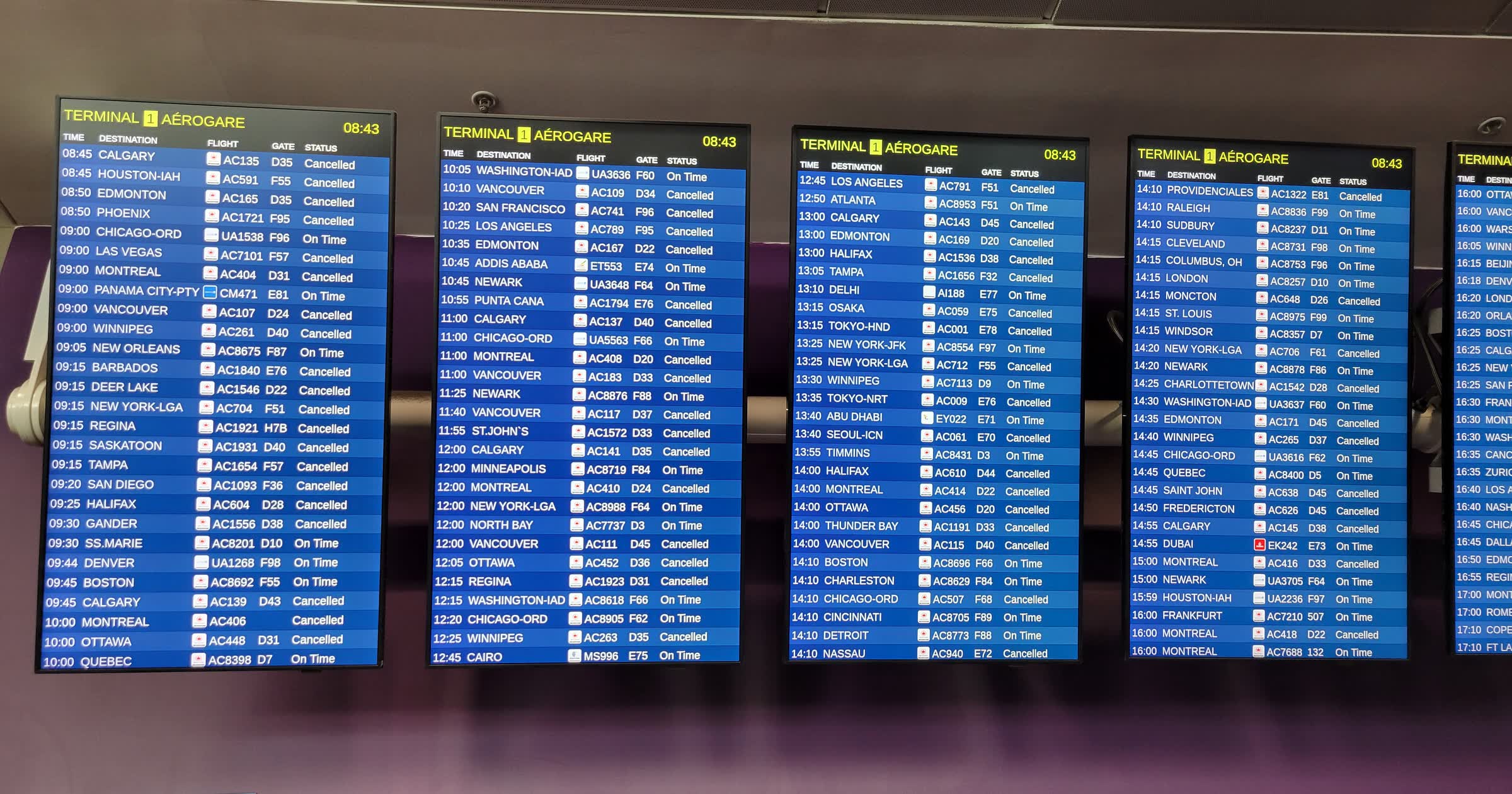
Politicians, news anchors, the FAA and every government agency learned the same thing this week. In a crisis, no one’s reputation can rest on old or unverified information, and neither can your brand’s. Here is how to reduce that risk and help people know who to believe.
The week was already shaky. On Wednesday, Slack users lost service for about an hour. Then on Thursday, November 12, a global Microsoft outage knocked out Outlook email, Teams, SharePoint and Copilot for millions of people from just before 1 p.m. Eastern. Microsoft said a technical issue tied to an earlier network upgrade was to blame, saw no sign of a cyberattack, and apologized on Friday. Anderson Economic Group, a Michigan research firm, estimated the lost productivity at about $7 billion. Inboxes stopped updating. Meetings vanished. Scam emails offering password resets and “service restored” notices were not far behind.
The same Thursday, the FBI said it had seized or restrained more than $1.2 billion of the roughly $6.3 billion stolen from Binance, the world’s largest crypto exchange, on October 29. It is regarded as the biggest crypto heist on record, and the FBI attributes it to TraderTraitor, a North Korean hacking group. Good news, and a reminder that the attack happened weeks ago and the story is still unfolding.
Also on Thursday, the FBI issued a public alert about a North Korean scheme it calls “FaceStealer.” It uses hijacked accounts, fake video calls and secretly recorded webcam footage of real people to trick workers into installing malware. The FBI says it has stolen more than $400 million in cryptocurrency over the past 18 months.
Most businesses were still catching their breath.
Then came Friday the 13th. That afternoon, the US National Weather Service posted a short notice that it was having nationwide internet and communications issues. Then came the line that should stop every leader. “You may not be able to access products on our webpages, or these products will be old.”
At 3:53 p.m. Eastern the same afternoon, the FAA grounded every departing flight in the country over a telecommunications outage at its air traffic control facilities. The stop lasted until 8:15 p.m., and NBC counted more than 5,000 cancellations. Transportation Secretary Sean Duffy pointed to overloaded routers, and a full explanation had not been published at the time of writing.

Forecasters kept doing their jobs, warnings still went out, and the Weather Service later said its radars had kept working and the problem was outdated content on some pages. But anyone checking one of those pages that afternoon could have been reading weather from hours before.
The most trusted source of weather in America had to warn people that its own information might be stale.
That same day, Forbes reported that a newly formed Russian extortion group was claiming it had stolen nearly a billion Expedia traveler records. Expedia had already confirmed to Skift that attackers reached its systems through a third-party data platform provider, in a supply chain attack that hit several companies.
One week. Two outages. Grounded planes. Stale pages. A breach wrapped in claims nobody could yet check. Fake faces on video calls. If you felt unsure what to believe, you were not alone.
Now think about your business.
Why stale information breaks trust
We talk a lot about fake information. Deepfakes, spoofed websites and scam emails are real threats, and businesses fight them every day. Old information does damage too, and it leaves no trace. Nobody hacked anything. Your own website, listing or AI answer tells a customer something that is no longer true.
A customer drives to your office during a storm because your hours page was never updated. A client quotes a price you changed last quarter. A patient follows a policy you retired months ago. Each one walks away thinking the same thing. I can’t rely on them.
Three things make this worse right now.
- Crises raise the stakes. When systems fail, people look for answers fast. They check your website, your Google profile and your social posts. That is the moment your information has to be right, and the moment it is most likely to be out of date.
- AI repeats what it finds. ChatGPT, Gemini, Perplexity and Google AI Overviews pull from what is published about you. If your old prices or hours are still out there, an AI answer can repeat them to thousands of people, and you may never see it happen.
- You have more listings than ever. This week OpenAI opened business listings inside ChatGPT. That is one more place your facts now live, and every new listing is another copy of your business that can drift out of date.
Old information is a trust problem first, and no software update fixes it.

Where stale information hides
Most businesses do not have one website. They have a dozen copies of themselves across the internet, and each one ages at its own speed.
| Where it lives | What goes stale | What the customer experiences |
|---|---|---|
| Your website | Hours, prices, team bios, service pages | “Their own site is wrong.” |
| Google Business Profile | Holiday hours, phone numbers, photos | A wasted trip or a call that goes nowhere |
| ChatGPT and other AI listings | Product feeds, descriptions, policies | An AI quoting a price you no longer offer |
| Social media | Pinned posts, old offers, outdated bios | Promotions that ended months ago |
| Directories and review sites | Addresses, owners, categories | A business that seems to have moved or closed |
| PDFs and downloads | Price sheets, brochures, forms | A signed form on last year’s terms |
The hard part is knowing which version is the real one, not fixing one page. When five copies of your business disagree, customers and AI engines have to guess.
Leaders live or die on current information
This is not only a business problem. In a crisis, every public leader is judged on one thing. Can we believe what they tell us right now?
A politician, a news anchor or an agency like the FAA that repeats yesterday’s numbers, or an update that has already changed, pays for it in trust. The public does not separate “the information was old” from “they got it wrong.” Fair or not, the leader owns it.
On Friday, officials chose their words carefully. Homeland Security Secretary Markwayne Mullin said there was “no indication, as of yet” that the outage was a nefarious act, and did not rule one out. That is the right model for any leader, in government or in business. Say what you know, say when you knew it, and say what you are still checking.
The same rule applies to a CEO speaking to customers, a managing partner speaking to clients or a founder speaking to investors. Your reputation in a crisis rests on two things people can see, that the information came from you and that it is current.
Old is one problem. Unknown is the other.
When official sources go silent, the gap does not stay empty. Other voices fill it.
On Friday, with flights grounded and weather pages stale, people turned to their feeds for answers. Within hours, posts about a possible attack were circulating. In moments like that, a screenshot, a confident post or an AI summary can travel faster than the facts.
So the second question matters as much as the first. Not only “Is this current?” but “Who is behind this?”
- Who wrote the news? A reporter at a known outlet, an anonymous account, a bot or an AI tool?
- Who is speaking for your business? Your team, or someone posting an “update” in your name?
- Who stands behind the AI answer? AI tools blend many sources into one reply, and the sources behind it are not always clear.
For a business, this cuts two ways. Your customers need to know which news about you is real. And they need to know that an announcement, a policy change or a crisis update came from you, not from a copycat taking advantage of the confusion.
Information people can trust has two things, a clear author and a clear date. Lose either one, and trust goes with it.
Claims are not facts. The Expedia lesson.
Read the Expedia story closely and you will see the problem in action.
The headline number, nearly a billion records, comes from the attackers. The group calling itself n0n says it took hundreds of millions of loyalty records, traveler profiles and account records, and it is threatening to publish the data unless Expedia pays. Expedia confirmed a breach through a vendor. It did not confirm the attackers’ numbers, name the vendor or link the attack to n0n. Both things can be true at once, a real breach and claims that nobody has verified.
So who is behind the information? In this case, part of it comes from criminals who benefit from making it sound as big as possible. That is a hard thing to say about a headline, and it is the question every reader should ask.
There is a second lesson. According to security researchers cited by Forbes, the attackers got in using a stolen key from a trusted vendor. They did not break down the front door. They borrowed someone else’s trust. That is how much of the damage happens now, through access that looked legitimate.
And there is a third. After any big breach, scam emails follow, dressed up as the company. Customers who cannot tell a real Expedia message from a fake one are at risk all over again. The same is true for your customers the day something goes wrong in your business.
Here is a simple way to judge any crisis story, about anyone.
- Who said it? The company, the government, a named reporter or the attacker?
- Is it confirmed or claimed? Look for the words confirmed, alleged and claims.
- When was it said? Crisis facts change by the hour. Check the time stamp.
- Where did it come from? An official channel, or a screenshot passed along?
FaceStealer, when the face you trust is a recording
If the Expedia story is about claims you cannot check, the FBI’s FaceStealer alert is about faces you cannot trust. Here is how the scheme works, in plain words.

- Someone you know messages you. The account is real. It belongs to a colleague or contact whose Telegram, LinkedIn, Slack or Discord account was hijacked earlier. The message suggests a quick call to catch up, collaborate or talk investment.
- You get a meeting link. It looks like Zoom, Teams or Google Meet. It is a fake copy on a lookalike web address.
- You see familiar faces. The hackers play recorded webcam video of your contact, and sometimes several “participants,” so the call looks normal.
- Then a technical problem. Your audio supposedly is not working. The person you think you know tells you to run an update or paste a command to fix it.
- The fix is malware. Now your device, your accounts and your contacts belong to the hackers. They have also been recording your face, and you become the next trusted contact used against someone else.
The FBI says it has seized more than 900 of these secretly recorded victim videos. It warns that the hackers have begun making deepfakes of well-known people in crypto and Web3, while still relying mostly on stolen real footage. And the target is not only crypto. The FBI says the same trick fooled the maintainer of a major open-source JavaScript library downloaded tens of millions of times a week, and that quick detection stopped a mass attack. The FBI did not name the library. It is widely reported to be axios, whose maintainer was lured in March by a fake Teams error, and whose malicious versions were live for about three hours before they were pulled.
This is the clearest example yet of the question at the heart of this article. You saw the face. You knew the name. The account was real. And the person behind it was not who you thought.
The FBI’s advice is simple enough for any team to adopt this week.
- Join calls through the official app with the invite code, not by clicking a link, especially from new or rare contacts.
- Keep your camera off until you can see, hear and talk with the person who invited you.
- Never run a script or paste a command to fix a video call. Update the app separately.
- Confirm the meeting through another channel. Got the invite on Telegram or LinkedIn? Call or text the person.
- Lock down your messaging apps with multifactor login and login alerts.
- If you think you were hit, warn your contacts and your employer, change your passwords and report it at IC3.gov with the keyword FaceStealer.
The fix starts with one question. Which version is official?
Every trustworthy system answers two questions. Who is behind this, and when?
The Weather Service answered both on Friday. It told people its pages might be old, and its official social accounts carried the updates. That is good crisis communication. Be honest about what might be stale, and point people to the source they can trust.
Businesses need the same discipline, and they need proof to back it up. This is where provenance comes in.
Provenance means a record of where something came from. The Trust Identity Protocol (TIP®), the open standard from The AI Lab, gives every signed piece of content a permanent public record called a CTID. That record shows who made it, when, how it was made, and whether it has changed since. Content with a CTID is a Verifiable Asset. Anyone can check it, with no account.
For a business, that turns “trust me, this is current” into something a customer can see.
- A dated official version. Your price sheet, policy page or press release carries a signed date. If someone finds an older copy, the dates show which one is newer.
- A clear author. The identity badge shows the content came from your verified business, not a copycat.
- Any change shows. If a signed document is edited later, it no longer matches its record. That helps when a stale or altered copy starts circulating.
One honest note. TIP proves origin, not accuracy. It can show that your hours page came from you on November 1. It cannot tell you whether those hours are still right. That part is still your job, and signing your content and keeping it current work together.
The AI Lab believes provenance will become part of how people and machines decide what to trust. AI engines are under pressure to surface sources they can stand behind, and a business that can show who is behind its information, and when, gives them the clearest signal it can.
Every problem this week, and where TIP fits
Each crisis this week broke trust in a different way. TIP will not fix every one of them. It does not keep servers running, stop a stolen key or recover stolen crypto. What it does is make two answers checkable, who is behind this and when it was published.
| The problem | What broke | How TIP helps | What TIP does not do |
|---|---|---|---|
| Slack and Microsoft outages | People could not reach their normal channels, and scam emails posing as help filled the gap. | Updates sent on backup channels carry your verified identity, and a signed email shows who sent it in Gmail or Outlook, so customers can check before they click. | Keep Outlook, Teams or Slack online. |
| Weather Service pages | Some pages showed old information, and readers could not tell how old. | Every signed page or update carries a dated public record, so the newest official version is easy to find. | Tell you whether the information is still correct. |
| FAA ground stop and attack rumors | Rumors and screenshots moved faster than official statements. | Signed statements from agencies, officials and newsrooms show who said it and when. An unsigned screenshot stands out as unverified. | Stop people from sharing rumors. |
| Politicians and news anchors | A leader who repeats old or unverified information loses trust. | A verified identity and a signed time stamp on every statement show what was said, by whom and when. | Make a statement accurate. |
| Expedia breach claims | Attacker claims and company statements mixed together in the headlines. | The company’s signed statements are clearly its own, and claims from anonymous groups carry no verified identity. Customers can check whether a breach email really came from the company. | Verify an attacker’s numbers or stop a stolen vendor key. |
| Binance heist | The story is still unfolding, and scammers love recovery offers. | Official updates from the exchange and investigators can be signed, so victims can tell a real update from a fake recovery offer. | Secure an exchange or recover funds. |
| FaceStealer fake video calls | A familiar face and a real account were used by someone else. | TIP ties identity to a verified person, not to a face on a screen. A signed message from the real person confirms an invite another way, and a recording carries no signature. | Verify a live video call today, or clean a device that is already compromised. |
| Stale listings, including ChatGPT | Many copies of your business drift out of date. | Sign your official facts and announcements so the real, current version is always identifiable. | Update other platforms for you. |
The pattern is the same in every row. When people cannot tell who is behind a message or when it was published, trust breaks. TIP makes both visible.
Two honest notes. First, TIP proves origin, not accuracy. It shows who published something and when, not that it is correct. Second, no single tool stops every attack. TIP works alongside good security habits like multifactor login, official apps and a confirmation call. It does not replace them.
What to do this week
You do not need new software to start. You need a routine.
- List every copy of your business. Website, Google Business Profile, ChatGPT listing, social profiles, directories, review sites and downloadable PDFs. Write down who can edit each one.
- Name one source of truth. Pick the page that holds your official hours, prices and policies. Every other listing should match it.
- Put a date on what matters. Add last updated dates to price sheets, policies and service pages. Better still, sign them so anyone can check the date.
- Set a review rhythm. Check your key facts monthly, and every time something changes, such as a holiday, a new price, a new policy or a new location.
- Write your crisis line now. Decide where customers should go for updates if your website or email goes down, and post it before you need it.
- Ask the AI engines. Every quarter, ask ChatGPT, Gemini, Perplexity and Google what they say about your hours, prices and services. Correct anything stale at the source.
- Sign your official content. Use TIP to give your key pages, documents, press releases, news updates and customer emails a verifiable author and date, so people can always see who is behind them and find the real version.
Checking a signed record is free for everyone. Signing is free for individuals, nonprofits, schools, governments, journalism organizations and businesses under USD 100,000 in annual revenue, and larger businesses use the published commercial license. To sign your crisis statements, press releases and customer emails as a company, write to [email protected].
Trust has a time stamp
The Weather Service did not lose trust on Friday. It kept it, because it told people the truth about its own information and pointed them somewhere reliable. You cannot stop every outage. You can make sure people always know which version of you is real, and how current it is.
Who’s behind the information? Who’s behind the news? And when was it published? Make all three answers easy to find.
Frequently Asked Questions
Why does outdated website information hurt a business?
Because customers act on it. A wrong price, old hours or a retired policy leads to wasted trips, disputes and lost confidence. During a crisis, when people check fast and decide fast, stale information spreads further. One dated, official source of truth, signed so the date can be checked, helps customers know which version is real.
Can AI search tools show old information about my business?
Yes. ChatGPT, Gemini, Perplexity and Google AI Overviews draw on what is published about you. If outdated prices, hours or policies are still online, an AI answer can repeat them. Check what these tools say about you each quarter and correct stale facts at the source, starting with your own website.
What is content provenance?
Content provenance is a record of where a piece of content came from, meaning who made it, when, and whether it has changed. The Trust Identity Protocol from The AI Lab gives each signed piece of content a permanent public record called a CTID, so anyone can check who published it and when, free and without an account.
Does TIP keep my information up to date?
No. TIP proves origin, not accuracy. It shows who published something, when, and whether it has changed since. Keeping facts current is still your job. A regular review routine and signed content together make it easy for customers to find your most recent official version.
How can I tell who is behind a news story or post?
Start with the source. Check that the outlet or account is the official one, look for a named author and a date, and be careful with screenshots that have neither. Content signed with the Trust Identity Protocol shows a verified identity and a public record of who published it and when.
How do I know if a data breach story is true?
Separate what is confirmed from what is claimed. Companies usually confirm that a breach happened before they confirm its size. Numbers that come from the attackers are claims, not facts. Check the company’s official statement and the date of each update, and be wary of emails about the breach that ask you to click or log in.
Was the Microsoft outage on November 12, 2026 a cyberattack?
Microsoft said no. It blamed a technical issue tied to an earlier network upgrade, said it found no sign of malicious activity, and apologized on November 13. Anderson Economic Group estimated about $7 billion in lost productivity. Scam emails posing as password resets and service restored notices followed, so check any email about the outage before you click.
Why did the FAA ground all departing flights on November 13, 2026?
The FAA ordered a nationwide ground stop for departing flights at 3:53 p.m. Eastern over a telecommunications outage at its air traffic control facilities, and lifted it at 8:15 p.m. Transportation Secretary Sean Duffy pointed to overloaded routers, and Homeland Security Secretary Markwayne Mullin said there was no indication that it was a nefarious act. A full official explanation had not been published at the time of writing.
Did hackers really steal a billion Expedia records?
That number is a claim. An extortion group calling itself n0n says it took nearly a billion records and threatens to publish them. Expedia confirmed a breach through a third-party data platform provider, but it has not confirmed the group's numbers, named the vendor or linked the attack to n0n. Be careful with any email about the breach that asks you to click or log in.
What is the FaceStealer scam?
FaceStealer is a North Korean scheme the FBI described in an alert on November 12, 2026. Hackers use hijacked Telegram, LinkedIn, Slack and Discord accounts to invite people to fake Zoom, Teams or Google Meet calls, play recorded webcam video of people the target knows, then claim a technical problem and trick the target into running malware. The FBI says it has stolen more than $400 million in cryptocurrency over 18 months. Join calls through the official app, keep your camera off until you can verify the host, and never paste code to fix a call.
What should my business do if its website or email goes down?
Decide your backup channel before you need it, such as your verified social accounts or an email update list, and tell customers where to look. During outages scammers often pose as official updates, so customers should know exactly which channels are really yours. A signed update lets them check.
Sources
- FBI, FLASH AC-111226-MS, “$400M ‘FaceStealer’ Crypto Theft Scheme,” November 12, 2026
- CBS News and AP, FBI seizes more than $1.2 billion in cryptocurrency stolen from Binance, November 13, 2026
- The Record, stolen Binance crypto recovered and FaceStealer disrupted, November 12, 2026
- TRM Labs, North Korea steals $6.36 billion from Binance
- CNBC, Microsoft outage hits Outlook and Teams, November 12, 2026
- CNN via KCCI, Microsoft apologizes for the Teams and Outlook outage, November 13, 2026
- Security Magazine, Microsoft outage could lead to $7 billion in losses (Anderson Economic Group)
- Field Effect, phishing lures themed on the Microsoft 365 outage
- BleepingComputer, axios npm hack used a fake Teams error fix to hijack the maintainer’s account
- Reuters via US News, “US National Weather Service reports nationwide internet, communications issues,” November 13, 2026
- Reuters via Yahoo News, “US National Weather Service says its radars operating normally,” November 13, 2026
- CBS News, FAA issues nationwide ground stop, November 13, 2026
- NBC News, FAA orders nationwide ground stop for departing flights, November 13, 2026
- Forbes, Suzanne Rowan Kelleher, Russian cyberattackers hit Expedia, claiming nearly a billion traveler records exposed, November 13, 2026
- Skift, Expedia confirms cyberattack through a third-party vendor, November 12, 2026
- Technology.org, OpenAI opens Businesses in ChatGPT, November 11, 2026
Hema Dey is Vice Chair of the AI Trust Council and Founder and Chief Executive Officer of Iffel International Inc. Dinesh Mendhe is the Founder and Chairman of The AI Lab Intelligence Unobscured, Inc., which created the Trust Identity Protocol. Hero photograph by OhanaUnited, licensed under CC BY-SA 4.0, cropped; the crop is shared under the same license.
