
Opinion
Should L3Harris Take the Blame? Not Until Someone Proves What Changed on Friday.
The FAA's network is old, and its contractor has run it for two decades. Blame for Friday's nationwide ground stop arrived within a day. Proof has not, and AI makes that gap more dangerous for every reputation involved.
Disclosure. Hema Dey’s firm, Iffel International, is a TIP technology partner, and The AI Lab, which publishes this article, builds the Trust Identity Protocol named in its final section. The author drafted it with AI assistance and edited every line.
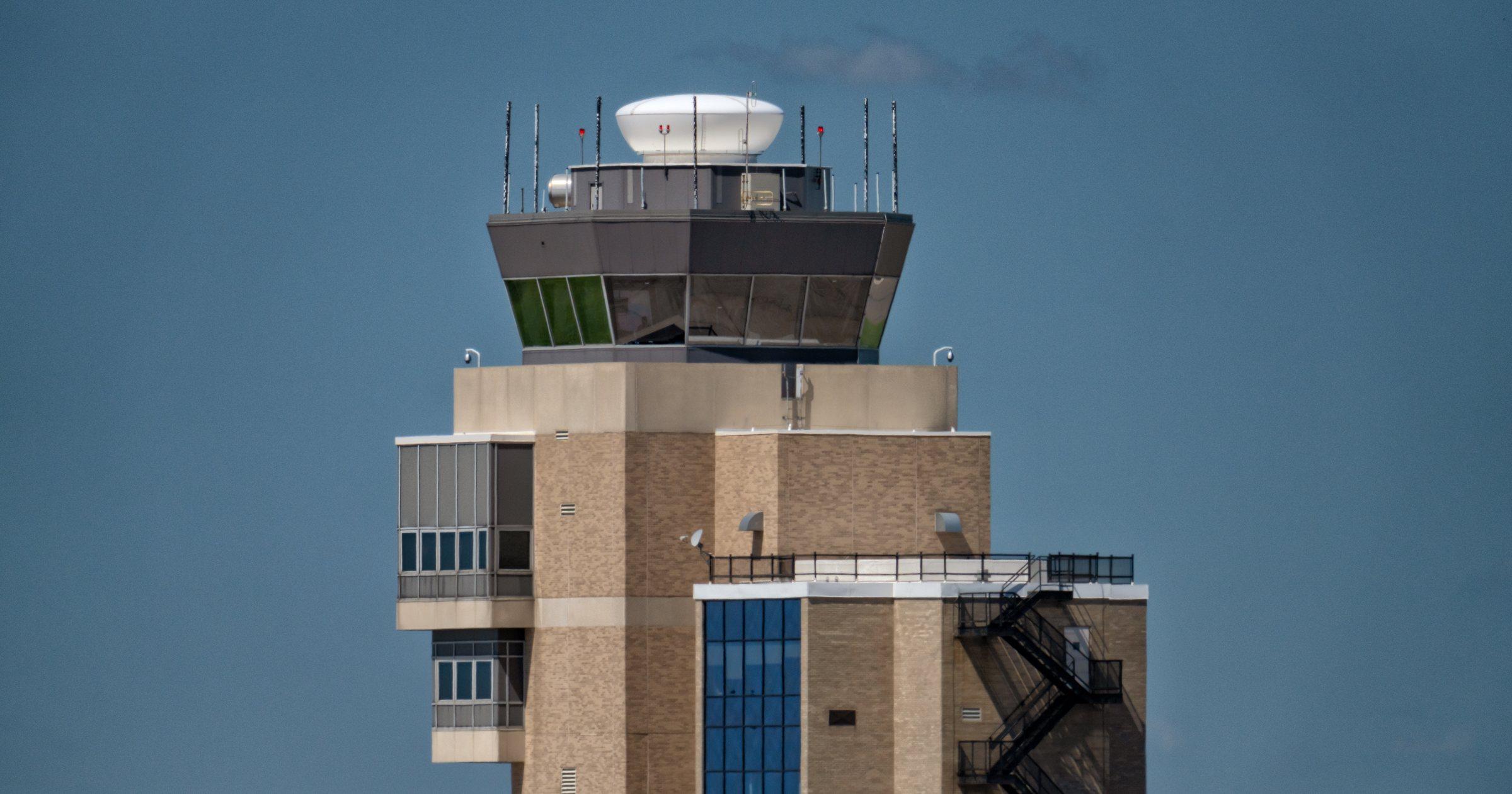
The copper wires are old. Nobody disputes that. The contractor is not new either. L3Harris has run the Federal Aviation Administration’s telecommunications network for about two decades, and the work it was doing on Friday, moving lines from copper to fiber, has been under way across the country for years.
So why did America’s air traffic system fail on Friday, November 13, and not on any of the thousands of days before it?
By Saturday afternoon, the Transportation Secretary had pointed at the contractor, the contractor had said it was helping investigate, and the Secretary had asked Congress for $50 billion. What nobody had published was the one thing that would settle the argument, a documented account of what changed on Friday.
That gap reaches far beyond aviation. In a crisis the first explanation tends to stick, and reputations are made or broken long before the facts are in. AI is making it harder to prove who was right.
What officials and L3Harris have said
This is what officials and the companies involved have said on the record so far.
- The stop. The FAA halted departing flights nationwide at 3:54 p.m. Eastern on Friday, after what Transportation Secretary Sean Duffy called “instability” in radar and communications at air traffic facilities. The stop was lifted at 8:15 p.m. More than 14,000 flights were canceled across Friday and Saturday, ABC News reported, citing FlightAware.
- Not an attack. “We see zero evidence of anything nefarious, and zero evidence of anything AI-related,” FAA Administrator Bryan Bedford said on Saturday.
- The work. Duffy said that at at least one remote FAA location, the contractor, L3Harris, was doing routine maintenance to move telecommunication lines from copper wire to fiber. He described the work as “straightforward.” L3Harris has not said whether its own employees or a partner company did the work.
- The router. Duffy said the router being replaced “started flooding other routers in our air traffic control system,” with more than 1,000 connection attempts every four to five seconds. Rebecca Guy, the FAA’s acting chief technology officer, said the agency had switched off the problem function on the roughly 60 routers of the same type in use nationwide, and was testing further with L3Harris.
- The open question. Duffy said officials were still working out whether the cause was user error or an installation error by L3Harris, “or did they install a faulty router?” Bedford said the agency would share its root-cause analysis when it is complete.
- The contractor. L3Harris said it is supporting the FAA’s investigation and “takes the nationwide ground stop and its impact on travelers, airlines and air traffic operations seriously.” It said that, with its telecom partners and the FAA, it has completed more than 70 percent of the planned conversion from copper to fiber. It did not address Duffy’s criticism.
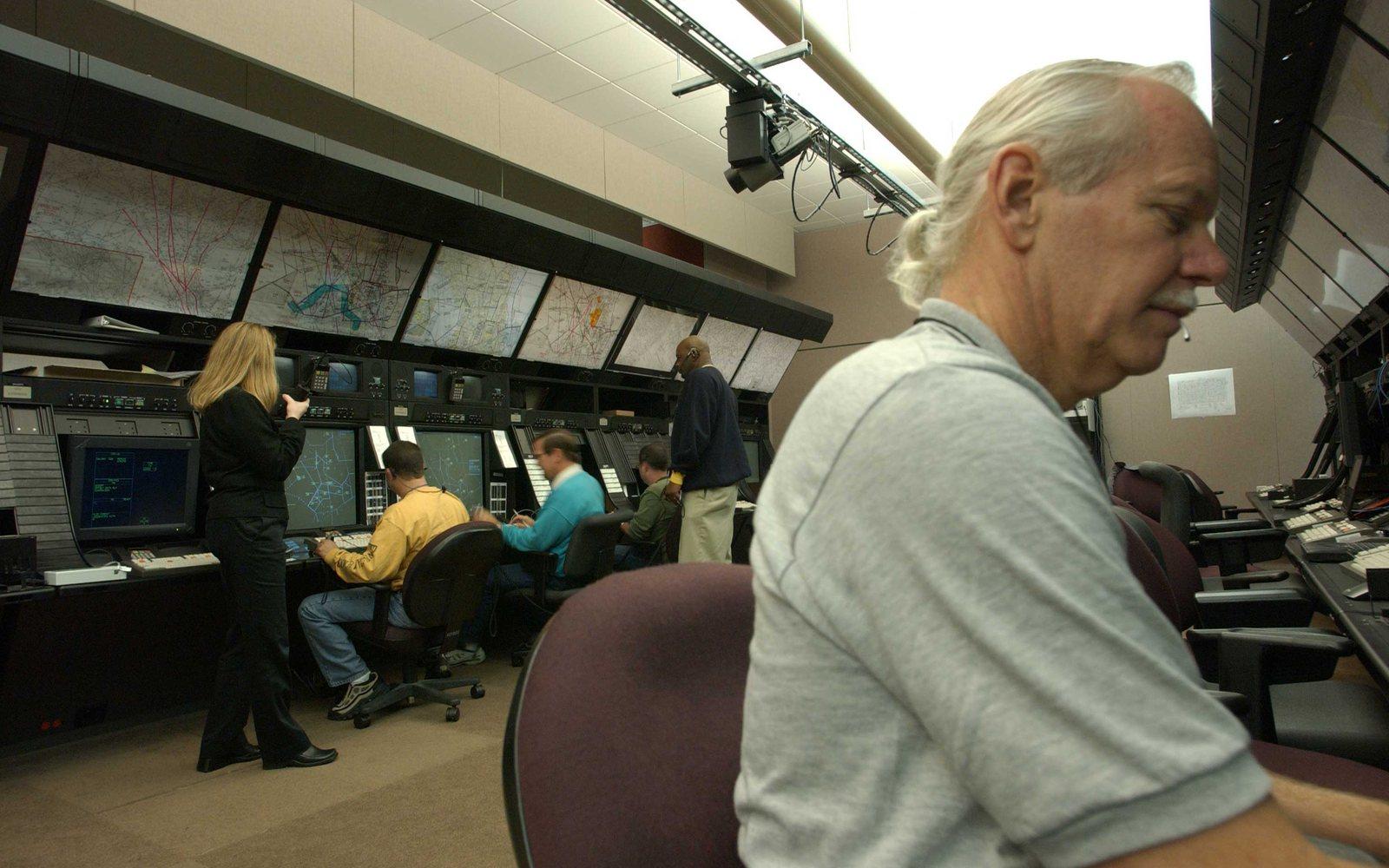
Old equipment explains why the network was fragile, not why it failed on Friday
Old equipment explains why a system is fragile. It does not explain why it broke on a particular afternoon. Copper lines have carried air traffic data for decades. L3Harris has held the network contract since 2002, when its predecessor, Harris Corp., won it. By the company’s own count, most of the fiber conversions are already done. Bedford called the router swap “ordinary course of business stuff,” separate from the FAA’s $12.5 billion modernization effort. “So let’s not conflate those two things,” he said.
It has happened before. In 2009, according to the Transportation Department’s inspector general, a Harris Corp. technician misconfigured a router while moving lines to fiber and disrupted 129 air traffic facilities. That history is one more reason to publish the change records for Friday’s work.
So something specific happened on Friday. The public record so far points to a single change, a router being replaced at a remote site that, in Duffy’s account, flooded the network. Investigators will need to answer these questions in public.
- Which site, and what exactly was changed? A new router, a new setting and a new connection are three different stories.
- Was the router faulty, or was it installed wrong? Duffy has said this is undecided. The answer decides whether this is an equipment story or a workmanship story.
- Why could one site take down the whole country? A network built for safety is supposed to contain a local failure. This one spread.
- What did the FAA switch off on those routers, and why was it on? Disabling a function nationwide suggests the function itself was part of the problem.
- Who approved the change, and when? In a well-run network a change like this is planned, approved and logged. Those records show whether procedures were followed.
Until those answers are published, “old equipment” and “contractor error” are both explanations. Neither is a finding.
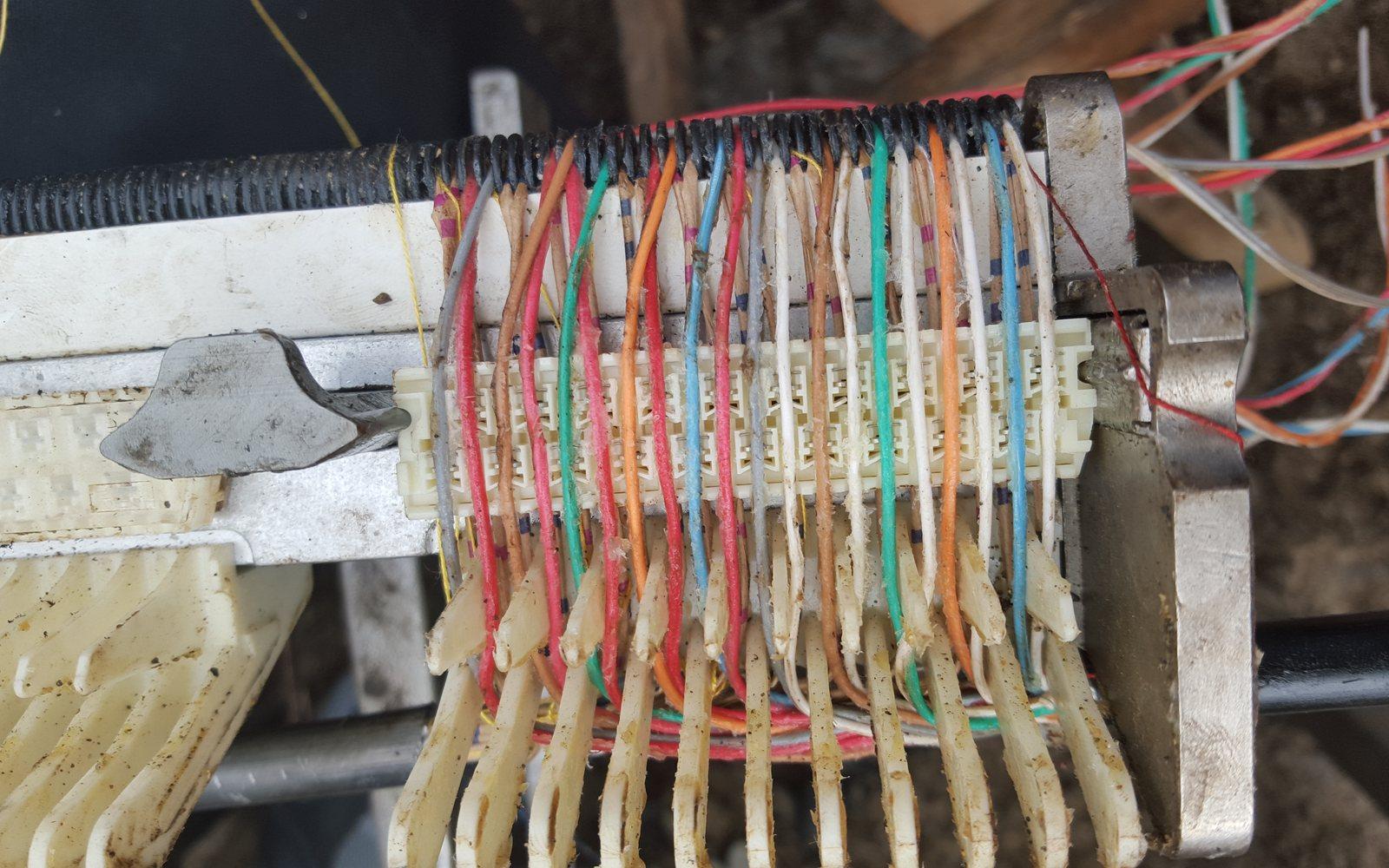
Three explanations put three reputations on the line
Within 24 hours the story had three possible culprits. Each carries a different reputation, and each side has a reason to want its version to stick.
The contractor. “Did they make mistakes yesterday?” Duffy asked of L3Harris. “And frankly, we’re going to hold people accountable.” He also said that until a new network is built, “I’m stuck with L3Harris, who owns this network.” L3Harris has not publicly accepted or disputed fault. It has said it is cooperating and that the conversion is largely complete.
The equipment. Duffy has also put weight on age. On Friday night he blamed old technology that became overloaded and described an “incredibly old” system that still relies on analog telecom. “Our contractor didn’t meet the moment, or the equipment didn’t meet the moment and caused the outages,” he said on Saturday.
Congress. Duffy asked lawmakers for $50 billion in emergency funding for a “complete overhaul,” and warned there would be more outages without it. AeroTime reported that the same morning, before the trouble began, Duffy and Russell Vought, director of the Office of Management and Budget, had already asked Congress for $30.1 billion for air traffic control and airport upgrades, although the copy of the letter CNN obtained was dated November 12. ABC News reported that Duffy was asked why the administration could not secure the money with Republicans controlling both chambers.
The three explanations can all be true at once. An old network can be fragile, a single change can be the trigger, and funding decisions can explain why the network was still old. But each one assigns blame differently, and the public will remember whichever arrived first and loudest.
AI makes it harder to prove who is right
Blame fights after a crisis are not new. What is new is how fast one version of events hardens, and how hard it has become to prove which version is true.
The first story becomes the training data. AI search tools and chatbots answer questions by summarizing what has been published. If the first wave of headlines says “contractor error,” that phrase is repeated, summarized and repeated again. A later finding that the router was faulty, or that the failure spread because of how the network was designed, has to fight its way back against thousands of copies of the first version.
Fake evidence is cheap. On Friday the sudden stop set off speculation online about a cyberattack, and about rogue AI, before officials said there was no sign of either. Anyone can now generate a convincing “leaked memo,” a fake screenshot of an internal chat or a cloned voice of an executive “admitting” fault. Each takes seconds to make and days to disprove.
Real evidence can be doubted too. When fakes are everywhere, a genuine log file or email can be waved away as “probably AI,” and the party that is right can struggle to prove it.
Reputations move faster than investigations. A root-cause report may take weeks. The share price, the contract and the public’s trust react in hours. For the contractor, the agency and the lawmakers, the reputational verdict may arrive long before the technical one.
Being right is no longer enough. You also have to be able to prove it, quickly, with evidence people can check.
Hours
Days
Proof
Should L3Harris take the blame? Not yet.
The company may well share the blame. Nobody has proven it yet.
The case for holding L3Harris responsible is straightforward. According to Duffy, its crew was doing the work when the network failed. It owns and runs that network. Planning, testing and safely carrying out a change like this is exactly what a contractor is paid to do.
The case for waiting is just as strong. Duffy himself said investigators do not yet know whether the cause was a mistake or a faulty router, and no root-cause finding had been published as of Sunday. If the router was defective, the question moves to its maker and to whoever approved it. And if one remote site could take down the national system, that is also a question about how the network was designed and funded, decisions that involve the FAA and Congress as well as the contractor.
Blame without proof is a reputation risk for everyone involved. If L3Harris is blamed and the evidence later points elsewhere, the damage to the company is done, and the agency’s credibility takes a hit too. If the company is at fault and that is proven, the public deserves to see the evidence, not only hear the accusation.
The fair answer is the one every organization should want applied to itself. Show the records, then assign the blame.
What would settle it
The answer to “what was different on Friday” already exists somewhere, in change tickets, approval records, router logs and maintenance schedules. The question is whether that evidence will be published, and whether the public will be able to trust it when it is. Three things would help, and they apply to any organization facing blame in a crisis.
- Records dated before the crisis. A change log that was dated and locked before anything went wrong is far more convincing than an explanation written after it.
- Statements with a clear author and date. When the FAA, L3Harris or a lawmaker speaks, people should see exactly who said it and when, and see any later correction beside it.
- Confirmed and claimed, kept apart. "Duffy said" is not the same as "investigators found." Every update should say which it is.
This is where content provenance comes in. The Trust Identity Protocol, which The AI Lab builds, gives a statement or document a public, signed record of who published it and when, and shows whether it has changed since. A document marked this way is a Verifiable Asset. A record like that does not decide who is to blame. It does make it much harder for anyone, on any side, to rewrite the record without a trace.
What to watch
- The FAA's root-cause findings, and whether they name the specific change made on Friday
- Congressional hearings, where Duffy, FAA leadership and possibly L3Harris may be asked for documents as well as statements
- Whether Congress acts on the $50 billion request
- Whether L3Harris publishes its own account of the work
Until then, the most honest answer to “who is to blame?” is the one Duffy himself gave on Saturday. “We haven’t determined what the fault was.”
Frequently Asked Questions
What caused the FAA ground stop on November 13, 2026?
Transportation Secretary Sean Duffy said a router being replaced during L3Harris copper-to-fiber telecommunications work at a remote FAA location flooded other routers in the air traffic control network, which made radar and communications unstable. He said officials had not yet determined whether the cause was user error, an installation error by L3Harris or a faulty router. As of November 15, the FAA had not published a root-cause finding.
Is L3Harris to blame for the FAA outage?
Not proven. L3Harris crews were doing the work when the network failed, and the company runs the network, so it carries responsibility for planning and testing the change. But Duffy said the cause was still undetermined, and a defective router or a network design that let one site affect the whole country would point to other parties as well. The change records for that site would settle it.
Was the FAA ground stop a cyberattack?
No evidence of one. FAA Administrator Bryan Bedford said there was zero evidence of anything nefarious and zero evidence of anything AI-related, although the sudden stop set off speculation online about a cyberattack before officials spoke.
How many flights were canceled during the FAA ground stop?
More than 14,000 flights were canceled across Friday and Saturday, ABC News reported, citing FlightAware. The FAA stopped departures nationwide at 3:54 p.m. Eastern on Friday, November 13, and lifted the stop at 8:15 p.m.
What does L3Harris do for the FAA?
L3Harris runs the FAA Telecommunications Infrastructure network under a contract its predecessor, Harris Corp., won in 2002, and with its telecom partners it has been moving those lines from copper to fiber. The company said it had completed more than 70 percent of the planned conversion.
How can an organization prove what happened in a crisis?
With evidence that existed before the crisis and that anyone can check. Change records dated and locked in advance, statements with a clear author and date, and a plain line between what was confirmed and what was only claimed. Content provenance records, such as those made with the Trust Identity Protocol, show who published a statement or document, when, and whether it has changed since.
Sources
- Federal Aviation Administration, "FAA Statement on Nationwide Ground Stop," November 13, 2026
- CNN, "What we know about the cause of the nationwide FAA ground stop," November 14, 2026
- ABC News, nationwide ground stop report and live updates, November 13 to 15, 2026
- ABC News live updates, FAA ground stop
- Fox Business, "Who is L3Harris," November 14, 2026
- Yahoo News live updates, FAA ground stop, November 14, 2026
- HuffPost, Sean Duffy's second FAA press conference, November 14, 2026
- CNBC, "Root cause of nationwide ground stop is unknown, FAA says," November 14, 2026
- AeroTime, "Duffy presses Republican Congress to fund ATC overhaul after nationwide outage," November 14, 2026
- Al Jazeera, "What forced the US to ground all planes?" November 15, 2026
- Scripps News, "What caused the FAA ground stop? Officials point to router failure"
Hema Dey is Vice Chair of the AI Trust Council, Founder and Chief Executive Officer of Iffel International Inc., and the author of The AI Translator. Disclosure. Iffel International is a TIP technology partner, and The AI Lab, which publishes this article, builds the Trust Identity Protocol. The author drafted this article with AI assistance and edited every line.