
Opinion
Who’s Behind It? A Week of Outages Shows Why Full Transparency Can’t Wait
Microsoft email, a nationwide ground stop, a bank and an airline failed in five days, and each time the first question was who did what. Every system and every AI agent needs a named human behind it, and the tools to show that already exist.
Disclosure. Hema Dey’s firm, Iffel International, is a TIP technology partner, and The AI Lab, which publishes this article, builds the Trust Identity Protocol, one of the systems the article’s closing sections describe. The author drafted it with AI assistance and edited every line.
In my last op-ed, I asked what was different about Friday the 13th at the FAA. Today I am asking a harder question. When the technology to prove who did what already exists, why are we still the last to know?
Intelligence is no longer scarce. Trust is.
In five days, workers around the world lost access to Microsoft email, Americans watched air travel stop, bank accounts go dark, and a major airline hold its departures. Then news broke of intelligence about a possible dirty bomb plot in Washington. Verified identity, signed records of who made what, and post-quantum protection are available today. So why isn’t full transparency a priority for governments, frontier AI companies, and boards?
I want to challenge politicians and lawmakers on a basic human right. As taxpayers, we fund these systems, and we deserve to know who is behind the systems and the messages we depend on. I also want to challenge the media. Your stories go through verification, but in a world of deepfakes and AI-generated content, can you really verify your stories now and be certain?
behind it?
Thursday, email went down for millions. Friday, every departing flight in America stopped.
Monday, a bank and an airline froze. That night, a frightening report hit the news.
Five days. Every time, the same question.
Five days of warnings
It started on Thursday, November 12, when a global Microsoft outage knocked out Outlook email and disrupted Teams and Copilot for users in dozens of countries. Microsoft said it was not a cyberattack, and its preliminary review traced the outage to a software defect that had sat in its email gateway servers since a July update. It declared service fully restored on November 14.
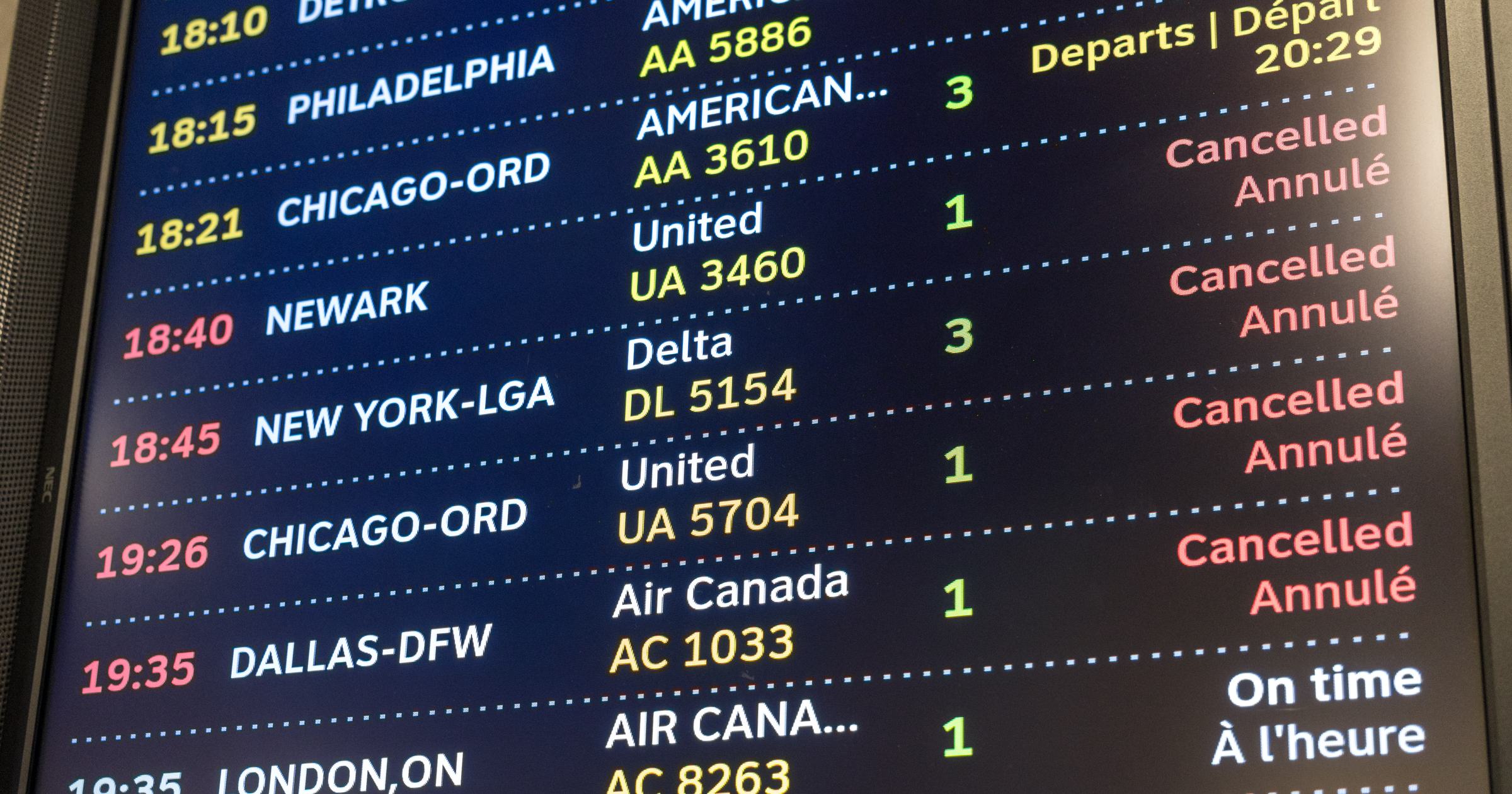
On November 13, the FAA ordered a nationwide ground stop. Days later, the cause is still unclear.
Officials have pointed to a router installed by the contractor L3Harris during an upgrade from copper lines to fiber, and the FAA has since said the router was in El Dorado, Arkansas. The router’s maker, Juniper Networks, owned by HPE, says its equipment was working as configured. Officials also say they don’t yet know whether the cause was human error or faulty equipment. Transportation Secretary Sean Duffy publicly said that until a new network is built, he is “stuck with L3Harris, who owns this network.” L3Harris says it is supporting the FAA’s investigation, and it is now defending its reputation in public while the facts are still being pieced together.
I’m not here to assign fault. That is the investigators’ job. My point is that when accountability isn’t built into a system from the start, everyone spends days asking who did what, while trust erodes for everyone involved. Travelers, airlines, the agency, and the contractor all lose.
On Monday, Chase customers reported that for much of the day they could not log in or move money, in some branches as well as online. I want to commend Chase. The bank said publicly that the cause was a software bug in on-premise hardware systems, said there was no evidence it was cyber-related, and had transactions posting normally by that evening. That is what fast, clear accountability looks like.
But for the general public, the crisis compounds every day. Monday was the third straight weekday with a massive technical failure. Each one gets fixed. Each one leaves people a little less sure the systems they depend on will be there tomorrow.
That same afternoon, a United Airlines outage delayed departures. According to the pilots’ union, the Air Line Pilots Association, crews lost access to the final aircraft weights they need to calculate a safe takeoff. United fixed it within two hours and said there was no indication of a cybersecurity issue. What it hasn’t said is what caused it.
Then, Monday night, CNN reported that U.S. intelligence indicates Iran is developing plans for a possible dirty bomb or chemical attack targeting senior officials in Washington. A White House spokesperson said the government is monitoring threats but that “at this time there are no credible threats to the homeland.” Iran’s mission to the United Nations called the chemical weapons claims fabricated. Nothing connects this to the outages. But it shows why verifiable information matters. In a moment like this, one deepfaked alert or fake official statement could cause panic. People need to know, instantly and for certain, who is speaking.
Within hours, television explainers were telling viewers what a dirty bomb is. The substance matched what experts have long said. A dirty bomb is not a nuclear bomb, and the blast itself would harm more people than the radiation, though contamination could require a long and costly cleanup. On air, that explanation came from a reporter rather than a named expert. The written reporting did cite experts. But most people heard it, not read it.
This is why transparency on who matters. In a crisis, who is speaking matters as much as what is said. When people can see the name and the qualifications behind a claim, they can judge it, trust it, and stay calm. When they can’t, rumor and fear fill the gap.
Now imagine all of this with thousands of AI agents acting on their own, and no IDs.
In every incident, regulators, boards, and the public should be able to answer three questions in minutes, not weeks.
- Who made this?
- Who approved it?
- Who created the AI agent that is misbehaving?
Today, most organizations can’t answer any of them quickly.
not weeks.
After a failure, three questions. Without records, the answers take weeks.
With a signed record for every change, each answer is already written down.
Regulators, boards and the public see the same answers in minutes.
Look closely and one thing connects every one of these stories, the blame game. Agencies point at contractors. Contractors point at equipment. Companies say “technical issue” and move on. The public waits, guesses, and loses a little more trust each time.
Approved by a named manager.
Something breaks. The agency points at the contractor, the contractor at the equipment.
The company calls it a technical issue and moves on. Trust drains away.
Put a name on every change, and the answer takes minutes.
I am a fierce advocate for digital trust and for calm. People have a right to clear, logical incident reports, and governing bodies, executives, and the general public all deserve to see the same facts at the same time. That is not too much to ask. The tools to do it exist. So I have to ask, why aren’t more organizations using them?
When there’s no name behind the agent, blame flows downhill
Here is a composite of what I’ve seen across mid-size professional services firms. A leadership team approved AI agents because their vendor recommended them. The agents drafted client updates and published thought leadership under senior partners’ names. Nobody owned the agents. Nobody had an ID on them.
Then one agent sent clients advice the partner whose name was on it had never written. The CEO blamed the vendor. The vendor blamed the configuration. IT blamed marketing. Marketing pointed to a junior employee who approved a template months earlier. It took weeks to piece together what happened.
The partner’s personal brand took the hit, and it didn’t stay inside the firm. When people asked AI engines about that partner, the error became part of how the partner was described. The junior who was blamed left, and so did two strong performers who watched it happen. When the board asked who was accountable, nobody could answer.
Your personal brand is only as safe as the least accountable agent publishing under your name.
That is why I believe every AI agent needs a named human owner on the day it’s deployed. Not the IT department. A person. We would never let a new employee start work without a manager, an ID, and a record of what they’re allowed to do. Yet we deploy agents with none of that.

on day one.
An AI agent writes to clients under a partner’s name. Nobody owns it.
It sends the wrong advice. The blame rolls downhill to the most junior person.
Give every agent a named human owner on day one, like a new employee.
The tools we lean on are weaker than we think
Much of today’s effort goes into AI detectors that guess whether something was machine-made. Guessing isn’t trust.
The other tools many organizations rely on have real limits too.
- Watermarks can be removed.
- Content credentials like C2PA depend on metadata that can be stripped as content travels across platforms.
- Multi-factor authentication helps, and you should keep it. But it can be phished and bypassed, and it often depends on the very systems that fail. Last week’s global Microsoft outage, which disrupted Outlook email in dozens of countries for about a day, is a reminder. If your second factor arrives by email, it goes down when email does. MFA can’t be the whole answer.
None of these tools answers the three questions that matter most. Who made this? Who approved it? Who created the AI agent that is misbehaving? Detectors guess. Watermarks and metadata can be stripped. MFA protects a login, not a decision. Until our tools can answer who, the blame game will continue.
answers who.
A detector only guesses. A watermark can be wiped away.
A label in the file is stripped as it travels. A login code sent by email goes down with email.
Useful tools, and none of them says who made it, who approved it or who owns the agent.
The quantum clock is running
Quantum is no longer twenty years away. Google has set 2029 as its own deadline to move to post-quantum cryptography, citing faster progress than expected. Scott Aaronson, long one of the field’s most careful skeptics, now relays that hardware experts whose judgment he trusts say a machine able to break deployed encryption ought to be possible by around that time, while allowing that they may be overoptimistic.
That is roughly three years. And attackers don’t have to wait. Data stolen today can be stored and unlocked later.
Much of the cryptography protecting identities and signatures today will eventually be breakable. NIST has already published post-quantum standards because of it. The question is whether we move before Q-Day or after.

Attackers can copy locked data today and keep it for later.
A large enough quantum computer could open today’s locks. Google has set 2029 as its deadline to switch.
New locks, standardized by NIST in 2024, are built to stay shut.
The technology is already here
This is not a problem waiting on a breakthrough. The building blocks for full transparency already exist, and several open standards and providers offer them today.
These systems can record who created a piece of work, when it was published, whether a person, AI, or both made it, and whether it has changed since. Each record can be tied to a verified identity and signed with post-quantum cryptography, using signature standards NIST has already published.
Most systems today keep trust in one central database. That means one place to fail and one place to attack. Distributed approaches, including those built on a DAG (a directed acyclic graph), share the record across many independent nodes. Think of it as a family tree of records. Every new entry links back to the ones before it, so history only grows forward and any attempt to change the past shows. Because the record lives in many places at once, there’s no single point to attack, and no single company or country controls it.

Same history
Same history
Same history
Same history
A family tree of records. Every new entry links back to the ones before it.
Try to change an old entry, and every link after it shows the change.
Copies live on many independent computers, so there is no single place to attack.
Systems like these prove origin, not truth. They won’t tell you whether a claim is correct. But they tell you who stands behind it, and accountability is what organizations actually run on.
So why isn’t this a priority?
Some pieces are moving. The EU AI Act requires AI-generated and manipulated content to be disclosed. NIST has published post-quantum standards. But disclosure rules and standards on paper are not the same as transparency in practice. From where I sit, four things are holding us back.
- Speed beats accountability. Frontier AI companies are racing to ship. Identity and provenance feel like friction, so they get pushed to the next release.
- Governance is treated as a checklist. Too many organizations treat trust as a policy PDF the legal team signs off once a year. Trust is earned in daily operations.
- Cost is the only metric. Leaders deploy AI to cut headcount without restructuring systems, training, or ownership. When something breaks, there’s no one to call.
- Vendors are trusted by default. When I ask CEOs why they made a deployment decision, many can’t explain it beyond “our vendor recommended it.” That isn’t a strategy.
Transparency also reveals who has true mastery of their craft and who has risen by gaming corporate politics and sheltering inside silos. Not everyone wants that light switched on.
What I’m asking for
To governments. Move from disclosure rules to verifiable proof. Require that AI agents acting on behalf of an organization carry an identity that traces back to an accountable person. Set a post-quantum timeline for identity and signatures, not just for encryption.
To frontier AI companies. Build identity and provenance in from day one, not as an add-on. Let every agent your platform runs carry an ID. Nobody should have to take a platform’s word for who made something. People deserve to see it for themselves.
To boards, CEOs, and CHROs. Give every AI agent a named human owner on the day it’s deployed. Treat agent identity as an HR question, not just an IT one. When every agent traces back to a person, colleagues and the public can see where the problems are, which agents have gone rogue, and who needs to fix them. Issues get resolved in hours, not through lengthy investigations.
Transparency is a human right
This is a big shift in thinking, and it has to happen now. Digital trust isn’t a compliance checklist. I believe it’s a human right. Everyone deserves transparent, post-quantum protection for their identity and their work.
I’m on Team Human x Team AI. AI can do extraordinary things for us, but only if people can still trust what they see, read, and hear, and know who made it.
So here is my question for every leader and every employee. Are you willing to put your name behind the AI agent you deployed and the work it produces, or are you hiding behind it?
Frequently Asked Questions
What happened in the week of outages in November 2026?
On November 12, a Microsoft outage disrupted Outlook, Teams and Copilot in dozens of countries for about a day. On November 13, the FAA stopped departing flights across the United States. On November 16, Chase customers reported trouble logging in and moving money, and a United Airlines outage delayed departures. CNN called it the third straight weekday with a massive technical failure. Microsoft, Chase and United each said there was no sign of a cyberattack.
What caused the FAA ground stop on November 13, 2026?
Officials traced it to a router that the contractor L3Harris was installing at an FAA site in El Dorado, Arkansas, during a move from copper lines to fiber. Transportation Secretary Sean Duffy said the open question is whether the installation or the router was at fault. The router's maker, Juniper Networks, owned by HPE, says its equipment worked as configured. As of November 17, no root-cause finding had been published.
Why does every AI agent need a named human owner?
When an agent with no owner makes a mistake, nobody can say who is accountable, and the blame rolls down to whoever is easiest to blame. Hema Dey argues that every agent should have a named person, not a department, on the day it is deployed, with an ID and a record of what it may do, the way a new employee has a manager. Problems can then be traced and fixed in hours.
Why aren't AI detectors, watermarks, C2PA and multi-factor authentication enough?
AI detectors estimate whether content was machine-made, which is a guess. University of Waterloo researchers showed watermarks can be removed, and the Content Authenticity Initiative says platforms still commonly strip the metadata C2PA relies on. CISA warns that common multi-factor methods can be phished, and a code sent by email fails when email does. None of them records who made content, who approved it or who owns an AI agent.
When could a quantum computer break today's encryption?
Nobody knows for certain. Google has set 2029 as its own deadline to move to post-quantum cryptography, citing faster progress than expected. Scott Aaronson wrote in April 2026 that hardware experts he trusts say a machine able to break deployed cryptosystems ought to be possible by around 2029, while allowing they may be overoptimistic. Data stolen today can be stored and unlocked later, which is why NIST published post-quantum standards in 2024.
Is there a system that records who made a piece of content today?
Yes. One is the Trust Identity Protocol (TIP), built by The AI Lab, which publishes this article. A TIP record names who signed content and when, says whether a person, AI or both made it, and carries a fingerprint that shows any later change. It is signed with ML-DSA, the post-quantum standard NIST published as FIPS 204. Content with a TIP record is a Verifiable Asset. It proves origin, not truth.
Read more about the Trust Identity Protocol, Verifiable Assets and the AI Trust Council.
Sources
- Al Jazeera, "Microsoft hit by global outages. What happened and why?" November 13, 2026
- BleepingComputer, "Massive Microsoft 365 outage disrupts Outlook, Teams, Copilot worldwide," November 12, 2026
- Outlook India, "Microsoft fixes 24-hour outage that impacted Outlook and Teams worldwide," November 14, 2026
- CBS News, "Airline schedules returning to normal after nationwide ground stop," November 16, 2026
- Scripps News, "What caused the FAA ground stop? Officials point to router failure during update"
- WXXI News, "FAA says L3Harris router in Arkansas sparked nationwide ground stop," November 16, 2026
- Fox Business, "Who is L3Harris, the federal contractor Sec Duffy says may have caused the FAA outage?" November 14, 2026
- CNBC, "Root cause of nationwide ground stop is unknown, FAA says," November 14, 2026
- CNN, "Thousands of Chase Bank customers report trouble with online banking services," November 16, 2026
- NBC News, "Chase says transactions back to normal after outage online and at some branches," November 16, 2026
- Daily Voice, "Chase identifies outage cause," with Chase's statement, November 16, 2026
- AeroTime, "United outage delays departures as pilots lose access to aircraft weight data," November 2026
- NBC Chicago, United Airlines system outage, November 16, 2026
- CNN, "US intel finds Iran planning to target senior Trump administration officials," November 16, 2026
- WVLT (CNN Newsource), "White House says no credible threats," November 16, 2026
- U.S. Nuclear Regulatory Commission, "Backgrounder on Dirty Bombs"
- University of Waterloo, "Watermarks offer no defense against deepfakes," July 23, 2025
- Content Authenticity Initiative, "The three pillars of provenance that make up durable Content Credentials," January 22, 2026
- CISA, "Implementing Phishing-Resistant MFA," October 2022
- Google, "Quantum frontiers may be closer than they appear," March 25, 2026
- Scott Aaronson, "Will you heed my warnings NOW?" Shtetl-Optimized, April 29, 2026
- NIST, "NIST Releases First 3 Finalized Post-Quantum Encryption Standards," August 13, 2024
- EU AI Act, Article 50, transparency obligations
- The Register, "Microsoft blames monster email outage on software defect introduced in July fix," November 16, 2026
- Reuters, "US probes why a router installation sparked mass flight grounding," November 2026
These events are recent and reporting is still moving. Facts were checked against the sources above on November 16 and 17, 2026, and any later correction will be noted here with its date.
Hema Dey is Vice Chair of the AI Trust Council, Founder and Chief Executive Officer of Iffel International Inc., and the author of The AI Translator. Disclosure. Iffel International is a TIP technology partner, and The AI Lab, which publishes this article, builds the Trust Identity Protocol. The author drafted this article with AI assistance and edited every line.